First of all, it is President-select( not presidentelect). Barely 19% of the 54 million eligible voters ( if we can trust the integrity of these numbers published by Khamnei’s regime which we do not, but giving them the benefit of doubt), cast their ballots not for Rouhani, but deliberately for Khamnei’s least favorite candidate out of the eight, to show how much they hate and disrespect the chief dictator and his regime. Overwhelming majority of the voters had boycott the elections. This was the only way left open and this is how the 19% responded. There is no democracy in Iran. It is a sham by Khamnei in desperate need for legitimacy and all these masquerades are his foolish and lame attempts to gain legitimacy. He will not succeed. He has to go the same road that all dictators are destined to go: Fall, Arrest, Prosecution, Punishment, Humiliation and Hell.
For president ‘select’ Hassan Rouhani, to make comments like, “the regime should end interference in the private lives of the Iranian people, free up Internet access and allow state media to be more open about Iran's problems”is like if Himmler was elected as prime minister in Hitler’s regime and called upon the government of the third Reich to be gentle with the Jews and allow them to play football in Nazi concentration camps.
The mainstream media, bereft of any moral courage, backbone and intellectual integrity whom are making such favorable remarks about Hassan Rouhani are truly making 30 million pro-democracy supporters in Iran very angry and making us wonder whatever has happened to these people’s moral compass. Do they have a clue who Rouhani is? Do they have any knowledge about the facts on the ground before making such bizarre statements? Don’t they know that Rouhani is just another member of the same old club of Mullahs behind the disastrous and tyrannical regime in Iran that has devastated our nation’s social, political and economic fabric? Don’t they know that Rouhani is a member of the same old group of Mullahs who committed enormous crimes against humanity in the last 34 years? Don’t they know that he is just another component of a machination that has repressed the people of Iran for 34 years? And now they think that he is all of a sudden a liberator? How naïve or foolish can these journalist be?
His ‘selection’ did not prompt a huge out pouring of support from Iranians hungry for change after 34 years of domestic security crackdowns and international confrontation and isolation under the supreme dictator Ali Khamnei, but only 19% of eligible voters ( if we can have any confidence in the integrity of these numbers which we do not ) cast their ballots for him in a deliberate defiance to the chief dictator Ali Khamnei because Rouhani was his least favorite and that is the only reason why people voted for him to show that they don’t want the Islamic Republic regime altogether. Rouhani has no power, nor any genuine intention to end the regime’s myriad human rights violations and gross intrusion into the most basic and personal affairs of the Iranian citizens. These human and civil rights violations are only a fraction of a much greater atrocities committed by the regime. The fact that Iranian women are stripped off from their most fundamental human and civil rights and liberties under the draconian Sharia law is not a simple issue that Rouhani can butter up. The fact that women cannot even attend a football match in their own city’s sports arenas is considered trivial compared to Khamnei’s Sharia courts that treat them like farm animals that men can buy four and as many as they like on temporary marriages and divorce them as and when they wish. Now for Rouhani or the president ‘select’ try to butter up these issue by making silly remarks about the nature of government after being a member of the same criminal regime that has atrociously violated all these fundamental rights and liberties for 34 years is a bitter joke, let alone , ending the criminal act of slowing down the internet.
The reality is that so long as Islamic Republic constitution is in effect, there is not even a glimpse of hope for a positive change in Iran and that is why the true desire of the people of Iran is a total and complete abolishment of this fraudulent regime followed by dismantling the entire criminal security apparatus membered by goons and criminal class of our society whom are protecting it and missioned to repress the people. The long list, scope of their atrocities, gravity of their crimes can be and will be revealed only after the regime is abolished and its ring leaders are arrested and prosecuted in a Nuremberg style trials.
The inference that the Iranian people are once again fooled to pin their hopes, this time on Rouhani, is such a gross exaggeration that it is considered a national insult. We are not fooled. The 19% who voted for Rouhani did so only to send a message to Ali Khamnei that his least favorite candidate was deliberately elected to let him know that he commands no popularity nor any respect amongst the people of Iran and that his days are numbered and people of Iran are getting ready to completely and totally abolish the brutal and tyrannical regime of Ali Khamnei who is repressing the people of Iran and looting the nation’s wealth while leaving 25 million young Iranians unemployed, underemployed, impoverished, repressed and in despair and hoping to fool them by these sham elections.
Iranian citizen’s natural and God given civil rights and liberties are not something that Ali Khamnei can decide to take away or give it back. These are certain inalienable rights, clearly specified in the United Nation’s Human Rights Charter which should be incorporated in our post Khamnei constitution by which such individual liberties are firmly guaranteed and no member of any government could have the right nor the power to violate them, and should they violate them, they would be prosecuted and punished to the maximum extent of the law. Ali Khamnei talks as though our human rights and liberties are negotiable or it is up to him to respect or not to respect them! Our natural and inalienable rights and liberties are not negotiable and no power on earth, no parliament and no perverted interpretation of Quran, no religious decree and no ayatollah’s whim have the right nor the power to violate them, and if they do violatethem, as Khamnei’s regime has done so for 34 years, they must and will be brought to justice.
To hear Rouhani the president ‘select’ an old member of the same old tyrant club to express sympathy for Iranian citizen’s civil liberties which has been trampled upon by the same regime that Rouhani has been a loyal member for 34 years, is so absurd and so ridiculously deceptive, so blatantly and obviously fraudulent that the police should be called in and have him arrested as a fraudster. Yet, the mainstream media are drooling and writing with enthusiasm as though he came from another planet. Whatever happened to the courageous journalists and reporters with intellectual depth and moral courage to ask these simple questions and tell the truth to their readers?
When Rouhani announces that “The power of the government lies in improving popular trust and...offering services, decreasing problems, setting the stage for further development of all citizens to help meet the needs of the people and desire for change,” it is like while Hitler is ruling,Dr Joseph Goebbelsis selected as prime minister of the Third Reich and says that the ‘power of government lies in improving the quality of life in Auschwitz and Dachau’. Imagine how ridiculous such statement will be. Or that hesays “it is not fair to keep the Jews in concentration camps without allowing them morning newspapers before we send them to death camps”. It would be like considering Rudolf Hess as the nice guy in Hitler’s team and build up hopes that things are going to get better. Just as Hitler’s entire criminal gang and his sick doctrine had to go, so does Khamnei’s entire gang and his bizarre doctrine has to go, and just as decent Germans were liberated from their own enemies within, the decent Iranians must be liberated from our own enemies within. Just as anyone who thought that Hitler’s ideology was open to gradual reform belonged to asylum, so are those fools today who pin their hopes in a gradual reform of Khamnei’s regime because a new face is put up. Dictatorial, undemocratic, corrupt, and violent Khamnei’s regime must be brought to a complete end in Iran. This is the true national aspiration of the people of Iran and only our enemies within and traitors would say otherwise.
Iran to pick new president.Iranian voters will choose among six candidates today to replace President Mahmoud Ahmadinejad. An Iranian professorsaysyoung voters are fired up over moderate candidate Hassan Rouhani, but he worries few voters will turn out after massive irregularities in the 2009 elections. A businessman who has been tracking the Twitter buzz surrounding the candidatesconfirmsRouhani’s popularity; he outstrips other candidates with 45,825 “units of attention.” Unfortunately, it looks like this elections won’t be free from politically scandal: Googlereportstens of thousands of Gmail accounts have been hacked in a “politically motivated” scheme.Al Jazeerahas an excellentinfographictelling you everything you need to know about the elections. More info: http://www.policymic.com/Persian Courses at PSU taught by Dr. Dick Davis
The world renowned professor Dick Davis (translator ofShahnameh) will teach two courses at PSU this spring:
WLL 410/510:Persian Folklore and MythologyTues/Thur 10-11:50
In this course we will look both at the rich heritage of pre-Islamic folklore that has survived in Iran, and also at the abundant folk narratives, rituals, and ceremonies of modern Iran; we shall trace connections between these two areas of interest, and examine the ways in which many of these ancient but still ongBlocking Medicine to Iranoing connections underlie much of the contemporary Persian/Iranian world-view.Taught in English.
PER 341:Introduction to Persian LiteratureTue/Thu 2-3:50
Studies selected texts from classical and modern Persian poetry and prose with emphasis on epic, lyric, and mystic traditions placed in historical contexts. Covers the most important genres such as the Ghasideh, the Ghazal, the Ruba'i, and the Masnavi. Numerous Persian poets of different poetic eras will be introduced and their biography will be studied.Taught in Persian.
Blocking Medicine to Iran
For more information, please contact Dr. Davis at davis.77@osu.edu
Blocking Medicine to Iran
By SIAMAK NAMAZI
Published: March 1, 2013, New York Times Opinion Page
Patients in Iran are dying of treatable diseases because of shortages in life-saving medicines. The past year has been nothing short of catastrophic for the Iranian health-care sector: Imports from American and European drug makers in 2012 were down by an estimated 30 percent since 2011, and they continue to fall.
Over the past three months, I led a group of independent business consultants with expertise in Iran to evaluate the problem. After conducting extensive interviews in Tehran and Dubai with Iranian importers and manufacturers of pharmaceuticals and medical equipment and their Western counterparts, we concluded that even though in theory the sanctions regime imposed on Iran by the United States and the European Union is supposed to allow humanitarian trade, in reality it impairs the delivery of drugs and medical equipment to Iran.
Although the Iranian government deserves firm criticism for incompetence in handling the crisis, poor allocation of scarce foreign currency resources and failing to crack down on corrupt practices, the main culprit are the U.S. and European sanctions that regulate financial transactions with Iran.
The system is irrational: There is a blanket waiver to the sanctions to facilitate humanitarian trade, but other laws restricting financial transactions with Iran make it impossible to implement that exception. So the trade of medical supplies is legal in theory and virtually impossible in practice because Iran cannot pay for the Western medicine it needs.
One problem is that when sanctions were tightened in 2012, Iran’s ability to sell oil was further limited and its main source of hard currency restricted. Another problem is that Iran’s main banking infrastructure — including the Central Bank of Iran and Bank Tejarat, Iran’s main trading bank — is blacklisted by Washington.
Sanctions have also choked-off Iranian banks from the global financial arena by putting draconian restrictions on international banks that deal with Iran, including by cutting them off from the Society for Worldwide Interbank Financial Telecommunication. Penalties for violating U.S. sanctions are so stern as to discourage most international banks, which are generally risk-averse anyway, from engaging in humanitarian trade.
A senior representative from a reputable Iranian pharmaceutical company told our study group that when he presented a French bank in Paris with documentation showing that a deal to ship vaccines to Iran was fully legal, he was told, “Even if you bring a letter from the French president himself saying it is O.K. to do so, we will not risk this.� Today, only one international bank — in Turkey — is willing to take the chance.
In simple terms, even when Iran can get its hands on dollars or euros to buy medical supplies, it cannot find a banking avenue to clear the trade. A senior representative at one American pharmaceutical company told me about a $60 million order for an anti-rejection drug for liver-transplant patients that fell through even though the sale was fully legal, all the needed licensing from the U.S. Treasury was in place, and Iran had allocated the needed hard currency. No bank would perform the transaction.
To compensate, Iran has been importing more drugs, or the active ingredients for them, from China and India. But these products are usually of inferior quality and more limited effectiveness than the equivalent from American and European manufacturers. And in the highly patented world of pharmaceuticals, substitution often isn’t an option at all, particularly when it comes to advanced medicines used to treat complex diseases like cancer and multiple sclerosis.
There are solutions. With fewer than 100 American and European companies holding patents to the most advanced medicines needed, it should be possible to craft narrow exemptions authorizing Iranian and international banks to do business with those companies for the exclusive purpose of providing medication to Iranian patients without undermining the sanctions regime overall.
This would mean carving out special exceptions for at least some of the 20 or so Iranian banks that the U.S. government currently blacklists wholesale, at least for the narrow purpose of purchasing medical drugs and supplies.
Washington must also reassure international financial institutions by clarifying existing regulations and stating unambiguously that no sanctions will be imposed on international banks that facilitate licensed or exempted humanitarian trade with Iran.
Another solution would be to narrowly adjust the terms of the exemptions allowing foreign countries and companies to purchase Iranian crude oil.
Despite existing restrictions, Iran currently sells around one million barrels of oil annually. But the terms of these special sales translate into a complex bartering system that ultimately leaves Tehran short of U.S. dollars and euros. For example, Iran’s oil sales to China are bought in renminbi, which it must keep in Chinese banks and can only use to pay Chinese companies for imports into Iran.
Iran should be allowed to convert some of its current holdings in Chinese, Indian and other banks around the world into hard currencies for the exclusive purpose of buying medical supplies. European states could also be authorized to buy small quantities of Iranian oil and hold the funds in escrow for Iran to use solely to that end.
The West must relax and rationalize the terms of its sanctions regime against Iran to allow more medical goods into the country. If it doesn’t, more Iranian men, women and children will suffer needlessly. Blocking Medicine to Iran
By SIAMAK NAMAZI
Published: March 1, 2013, New York Times Opinion Page
Patients in Iran are dying of treatable diseases because of shortages in life-saving medicines. The past year has been nothing short of catastrophic for the Iranian health-care sector: Imports from American and European drug makers in 2012 were down by an estimated 30 percent since 2011, and they continue to fall.
Over the past three months, I led a group of independent business consultants with expertise in Iran to evaluate the problem. After conducting extensive interviews in Tehran and Dubai with Iranian importers and manufacturers of pharmaceuticals and medical equipment and their Western counterparts, we concluded that even though in theory the sanctions regime imposed on Iran by the United States and the European Union is supposed to allow humanitarian trade, in reality it impairs the delivery of drugs and medical equipment to Iran.
Although the Iranian government deserves firm criticism for incompetence in handling the crisis, poor allocation of scarce foreign currency resources and failing to crack down on corrupt practices, the main culprit are the U.S. and European sanctions that regulate financial transactions with Iran.
The system is irrational: There is a blanket waiver to the sanctions to facilitate humanitarian trade, but other laws restricting financial transactions with Iran make it impossible to implement that exception. So the trade of medical supplies is legal in theory and virtually impossible in practice because Iran cannot pay for the Western medicine it needs.
One problem is that when sanctions were tightened in 2012, Iran’s ability to sell oil was further limited and its main source of hard currency restricted. Another problem is that Iran’s main banking infrastructure — including the Central Bank of Iran and Bank Tejarat, Iran’s main trading bank — is blacklisted by Washington.
Sanctions have also choked-off Iranian banks from the global financial arena by putting draconian restrictions on international banks that deal with Iran, including by cutting them off from the Society for Worldwide Interbank Financial Telecommunication. Penalties for violating U.S. sanctions are so stern as to discourage most international banks, which are generally risk-averse anyway, from engaging in humanitarian trade.
A senior representative from a reputable Iranian pharmaceutical company told our study group that when he presented a French bank in Paris with documentation showing that a deal to ship vaccines to Iran was fully legal, he was told, “Even if you bring a letter from the French president himself saying it is O.K. to do so, we will not risk this.� Today, only one international bank — in Turkey — is willing to take the chance.
In simple terms, even when Iran can get its hands on dollars or euros to buy medical supplies, it cannot find a banking avenue to clear the trade. A senior representative at one American pharmaceutical company told me about a $60 million order for an anti-rejection drug for liver-transplant patients that fell through even though the sale was fully legal, all the needed licensing from the U.S. Treasury was in place, and Iran had allocated the needed hard currency. No Blocking Medicine to Iran
By SIAMAK NAMAZI
Published: March 1, 2013, New York Times Opinion Page
Patients in Iran are dying of treatable diseases because of shortages in life-saving medicines. The past year has been nothing short of catastrophic for the Iranian health-care sector: Imports from American and European drug makers in 2012 were down by an estimated 30 percent since 2011, and they continue to fall.
Over the past three months, I led a group of independent business consultants with expertise in Iran to evaluate the problem. After conducting extensive interviews in Tehran and Dubai with Iranian importers and manufacturers of pharmaceuticals and medical equipment and their Western counterparts, we concluded that even though in theory the sanctions regime imposed on Iran by the United States and the European Union is supposed to allow humanitarian trade, in reality it impairs the delivery of drugs and medical equipment to Iran.
Although the Iranian government deserves firm criticism for incompetence in handling the crisis, poor allocation of scarce foreign currency resources and failing to crack down on corrupt practices, the main culprit are the U.S. and European sanctions that regulate financial transactions with Iran.
The system is irrational: There is a blanket waiver to the sanctions to facilitate humanitarian trade, but other laws restricting financial transactions with Iran make it impossible to implement that exception. So the trade of medical supplies is legal in theory and virtually impossible in practice because Iran cannot pay for the Western medicine it needs.
One problem is that when sanctions were tightened in 2012, Iran’s ability to sell oil was further limited and its main source of hard currency restricted. Another problem is that Iran’s main banking infrastructure — including the Central Bank of Iran and Bank Tejarat, Iran’s main trading bank — is blacklisted by Washington.
Sanctions have also choked-off Iranian banks from the global financial arena by putting draconian restrictions on international banks that deal with Iran, including by cutting them off from the Society for Worldwide Interbank Financial Telecommunication. Penalties for violating U.S. sanctions are so stern as to discourage most international banks, which are generally risk-averse anyway, from engaging in humanitarian trade.
A senior representative from a reputable Iranian pharmaceutical company told our study group that when he presented a French bank in Paris with documentation showing that a deal to ship vaccines to Iran was fully legal, he was told, “Even if you bring a letter from the French president himself saying it is O.K. to do so, we will not risk this.� Today, only one international bank — in Turkey — is willing to take the chance.
In simple terms, even when Iran can get its hands on dollars or euros to buy medical supplies, it cannot find a banking avenue to clear the trade. A senior representative at one American pharmaceutical company told me about a $60 million order for an anti-rejection drug for liver-transplant patients that fell through even though the sale was fully legal, all the needed licensing from the U.S. Treasury was in place, and Iran had allocated the needed hard currency. No bank would perform the transaction.
To compensate, Iran has been importing more drugs, or the active ingredients for them, from China and India. But these products are usually of inferior quality and more limited effectiveness than the equivalent from American and European manufacturers. And in the highly patented world of pharmaceuticals, substitution often isn’t an option at all, particularly when it comes to advanced medicines used to treat complex diseases like cancer and multiple sclerosis.
There are solutions. With fewer than 100 American and European companies holding patents to the most advanced medicines needed, it should be possible to craft narrow exemptions authorizing Iranian and international banks to do business with those companies for the exclusive purpose of providing medication to Iranian patients without undermining the sanctions regime overall.
This would mean carving out special exceptions for at least some of the 20 or so Iranian banks that the U.S. government currently blacklists wholesale, at least for the narrow purpose of purchasing medical drugs and supplies.
Washington must also reassure international financial institutions by clarifying existing regulations and stating unambiguously that no sanctions will be imposed on international banks that facilitate licensed or exempted humanitarian trade with Iran.
Another solution would be to narrowly adjust the terms of the exemptions allowing foreign countries and companies to purchase Iranian crude oil.
Despite existing restrictions, Iran currently sells around one million barrels of oil annually. But the terms of these special sales translate into a complex bartering system that ultimately leaves Tehran short of U.S. dollars and euros. For example, Iran’s oil sales to China are bought in renminbi, which it must keep in Chinese banks and can only use to pay Chinese companies for imports into Iran.
Iran should be allowed to convert some of its current holdings in Chinese, Indian and other banks around the world into hard currencies for the exclusive purpose of buying medical supplies. European states could also be authorized to buy small quantities of Iranian oil and hold the funds in escrow for Iran to use solely to that end.
The West must relax and rationalize the terms of its sanctions regime against Iran to allow more medical goods into the country. If it doesn’t, more Iranian men, women and children will suffer needlessly.
Siamak Namazi is a Dubai-based business consultant and a former Public Policy Fellow at the Woodrow Wilson Center for International Scholars.
http://www.nytimes.com/2013/03/02/opinion/blocking-medicine-to-iran.html?_r=0 bank would perform the transaction.
To compensate, Iran has been importing more drugs, or the active ingredients for them, from China and India. But these products are usually of inferior quality and more limited effectiveness than the equivalent from American and European manufacturers. And in the highly patented world of pharmaceuticals, substitution often isn’t an option at all, particularly when it comes to advanced medicines used to treat complex diseases like cancer and multiple sclerosis.
There are solutions. With fewer than 100 American and European companies holding patents to the most advanced medicines needed, it should be possible to craft narrow exemptions authorizing Iranian and international banks to do business with those companies for the exclusive purpose of providing medication to Iranian patients without undermining the sanctions regime overall.
This would mean carving out special exceptions for at least some of the 20 or so Iranian banks that the U.S. government currently blacklists wholesale, at least for the narrow purpose of purchasing medical drugs and supplies.
Washington must also reassure international financial institutions by clarifying existing regulations and stating unambiguously that no sanctions will be imposed on international banks that facilitate licensed or exempted humanitarian trade with Iran.
Another solution would be to narrowly adjust the terms of the exemptions allowing foreign countries and companies to purchase Iranian crude oil.
Despite existing restrictions, Iran currently sells around one million barrels of oil annually. But the terms of these special sales translate into a complex bartering system that ultimately leaves Tehran short of U.S. dollars and euros. For example, Iran’s oil sales to China are bought in renminbi, which it must keep in Chinese banks and can only use to pay Chinese companies for imports into Iran.
Iran should be allowed to convert some of its current holdings in Chinese, Indian and other banks around the world into hard currencies for the exclusive purpose of buying medical supplies. European states could also be authorized to buy small quantities of Iranian oil and hold the funds in escrow for Iran to use solely to that end.
The West must relax and rationalize the terms of its sanctions regime against Iran to allow more medical goods into the country. If it doesn’t, more Iranian men, women and children will suffer needlessly.
Siamak Namazi is a Dubai-based business consultant and a former Public Policy Fellow at the Woodrow Wilson Center for International Scholars.
http://www.nytimes.com/2013/03/02/opinion/blocking-medicine-to-iran.html?_r=0
Siamak Namazi is a Dubai-based business consultant and a former Public Policy Fellow at the Woodrow Wilson Center for International Scholars.
For the first time, United States and Iran appear to have begun real negotiations. Though no agreement has been reached yet, the meeting in Kazakhstan this week was a relative success. Previous rounds of talks resembled stare-offs before boxing matches. They centered on coercion: the main motivator for concessions was the threat of new sanctions or other escalatory steps. This time around there was a genuine give-and-take. If the next meeting in Istanbul strengthens this positive trend, a major achievement can be in the making.
The two sides have been stuck in an escalatory dynamic. Both are pursuing a dual track policy of seeking negotiations while continuously escalating pressure on the other side at the same time. But rather than having the pressure compel the other side to adopt more a flexible attitude, the opposite has happened. Both sides have hardened their positions and dug in.
The unprecedented sanctions pressure on Iran, which has caused tremendous damage to the Iranian economy including cutting Iran's oil income in half and slashing the value of Iran's currency with almost 70%, did not result in Iran softening its position. Instead, Iran escalated by increasing its enrichment program, adding new centrifuges, including new advanced centrifuges, and growing its stockpile of enriched uranium. While the U.S. moved closer to the potential collapse of the Iranian economy through sanctions, Iran moved closer to a nuclear breakout capability. The escalation game left both sides in a worse position.
What is potentially a game-changer with the meeting in Almaty is that the paradigm of the talks shifted from perpetual escalation to an exchange of concessions and incentives. Both sides shifted their positions and moved a bit closer to the other.
The updated supposed P5+1 proposal is neither smaller nor bigger, it's just more sophisticated. By restricting the accumulation of near 20 percent enriched uranium in Iran while enabling the Iranians to produce sufficient fuel for the Tehran Research Reactor, Washington has focused on what's important. The production of near 20 percent enriched uranium is not a problem as long as the Iranians turn the uranium into fuel pads for the reactor (which, according to the latest IAEA report, they are doing). So there is no need to waste political capital on demanding a complete halt to 20 percent at this stage.
To ensure Tehran's compliance “ and address the potential dangers of Iran's updated centrifuges that can improve its dash-out capability “ the new proposal calls for enhanced IAEA monitoring measures that provide early warning of any attempt to rapidly or secretly abandon agreed limits and produce weapons-grade uranium. The shift towards enhanced inspections is critical “ ultimately, only an inspections and verification based solution can provide the necessary limitations and transparency the international community is seeking.
In regards to the demand of shutting down Fordo “ a request the Iranians have dismissed as a non-starter “ the P5+1 is now demanding that activities there be suspended. In return, there were discussions about suspending sanctions such as the recently imposed gold trade sanctions. Though the sanctions relief offered is not nearly as substantive as Tehran would prefer, this may still be digestible for Iran since the demands have in a way also decreased.
The gold sanctions may carry additional political symbolism since Congress regulates them. President Barack Obama would have to exercise his waiver rights to suspend them. Though lifting them has not been offered, the fact that Congressional sanctions are part of the mix may be intended to signal Tehran that the president is willing to face the inevitable challenge Congress will pose in opposition to virtually any conceivable compromise on the nuclear issue. Such a signal would be very valuable since Tehran harbors profound doubts about President Obama's ability to deliver, mindful of the opposition he faces from Congress.
Iran's lead negotiator, Saeed Jalili, struck a positive tone in the ensuing press conference and relished in the fact that the P5+1 package had been sweetened, pointing out that the P5+1 offered some suggestions that include some of the items proposed by Iran in Moscow. He added: Some of the points raised in their response were more realistic compared to what they said in the past, and they tried to bring proximity in some points between the viewpoints of Iran and their own, which we believe is positive, despite the fact that we have a long way to reach to the optimum point.
Calling the proposal "a positive step" and a "turning point" Tehran must now study it carefully and prepare a response. Though the gap between the two sides is still wide, the fact that two additional meetings were scheduled without any Iranian foot-dragging “ in the midst of the Iranian holiday season mind you “ may also signal increased seriousness.
Hopefully, history won't repeat itself. As I describe in A Single Roll of the Dice “ Obama's Diplomacy with Iran, the atmosphere at the first negotiation round under the Obama administration on October 1, 2009 in Geneva was also very positive.
The morning session began with relatively short opening speeches. The brevity of the Iranian opening statement was viewed as a positive sign. In previous meetings Jalili had presented long monologues addressing the many injustices Iran had suffered at the hands of Western powers without going into the nuclear issue. This had earned him a reputation of being an unbearable person among the Europeans and Americans. You were obliged to be very, very patient when engaging with him, a European diplomat complained. While the first European encounter with Jalili months earlier in London had been totally horrible there was a much more constructive atmosphere in Geneva, and Jaliliâ's conduct was described as almost normal.
The optimism after Geneva lasted only a few days though. Soon thereafter, the atmosphere turned sour and eventually, the talks broke down after the ensuing technical meeting.
Whether Almaty will meet the same fate as Geneva depends on Tehran. The ball is in Iran's court.
Trita Parsi is the founder and president of the National Iranian American Council and an expert on U.S.-Iranian relations, Iranian foreign policy, and the geopolitics of the Middle East. He is the author of Treacherous Alliance: The Secret Dealings of Iran, Israel and the United States and Single Roll of the Dice Obama's Diplomacy with Iran.
Son: Iranian dad arrested for my Facebook posts
By Ashley Fantz, CNN
updated 7:40 AM EDT, Fri July 13, 2012
Abbas Khameneh lives in Iran while his son, Yashar Khameneh, lives in Holland.
STORY HIGHLIGHTS
25-year-old Iranian contributed to Facebook page insulting imam
Yashar Khameneh says his father was arrested for his Facebook activities
He says government has demanded passwords in exchange for freedom
But Khameneh says he doesn't manage the page and cannot take it down
(CNN) -- How many young people have gotten in
trouble for something they've posted on Facebook? Maybe a party picture
or an offensive comment compromised their chances at a job.
But a 25-year-old Iranian
says his Facebook activity has led to his father's detention in a
notorious prison in Tehran. And now he's struggling to find a way to
free him.
Far
from a monolithic relationship, Iran and the United States have spent
as many decades as friends as they have as enemies. And for most of the
history, whatever the polarity, nuclear issues have played a role.
1923
Arthur C. MillspaughHarris & Ewing
U.S. Sends Adviser to Fix Persian Finances
Arthur
C. Millspaugh, an economic adviser to the United States government, is
sent as a private citizen to Persia -- as Iran was then known -- to
bring change to a country hampered by administrative inefficiency. The
Persians viewed the adviser's involvement as a way to bring in foreign
investment and to counterbalance the influence of the European powers.
The mission continued until 1928, when Mr. Millspaugh lost favor with
the shah.
Before the Coup Attempt
W. Averell Harriman, left, President Harry S. Truman's personal foreign
policy adviser, conferring with Prime Minister Mohammed Mossadegh of
Iran in 1951. An interpreter sits between them.Associated Press
Prime Minister Ousted in Coup
The
Central Intelligence Agency backs a plan, coordinated with British
intelligence, to overthrow the Iranian prime minister, Mohammed
Mossadegh. The plan has the approval of President Dwight D. Eisenhower
and is conceived because of British concerns over petroleum exports and
the relationship of the prime minister with the Soviets. The coup,
orchestrated by an American agent, leads to the ouster of Mr.
Mossadegh, and the shah, Mohammed Reza Pahlavi, becomes an authoritarian
monarch.
Iran
signs the Iran-United States Agreement for Cooperation Concerning Civil
Uses of Atomic Energy as part of President Eisenhower’s Atoms for Peace
program. The accord allows the United States to lease several kilograms
of enriched uranium to Iran and calls for cooperation on peaceful uses
of nuclear energy.
The
shah of Iran, Mohammed Reza Pahlevi, center left, and his wife, Empress
Farah, center right, with President John F. Kennedy and Jacqueline
Kennedy.Associated Press
On State Visit, Shah Warns of Communism
On
an official state visit to the United States, the shah tells Congress
that he will not surrender to communism, but that the United States must
continue its foreign aid. "I recognize that it is a burden, and I
sympathize with the desire to lay down," he said. "But the need for it
is not yet finished. The threat has not ended."
President John F. Kennedy praises the shah: "Occupying as you do in Iran
a most important strategic area, surrounded as you are by vital and
powerful people, your country has been able to maintain its national
independence century after century, until we come to the present date
where, under great challenges you, Your Majesty, lead that historic
fight."
Iran
is one of 51 nations to sign the Treaty on the Nonproliferation of
Nuclear Weapons on July 1, 1968. Iran’s Parliament ratifies it in
February 1970.
President
Gerald R. Ford published a directive, explained in a memorandum
circulated by Secretary of State Henry A. Kissinger, that would "permit
U.S. material to be fabricated into fuel in Iran for use in its own
reactors." The directive also would allow the Iranians to buy and
operate an American-built nuclear reprocessing plant for extracting
plutonium from reactor fuel. Interviewed by The Washington Post in 2005,
Mr. Kissinger said of the deal: "They were an allied country, and this
was a commercial transaction. We didn't address the question of them one
day moving toward nuclear weapons."
On
New Year’s Eve, President Jimmy Carter stands beside the shah and
toasts him, saying, "Iran, because of the great leadership of the shah,
is an island of stability."
The deposed shah, with Empress Farah and two of their children, dodged questions from photographers in Nassau, the Bahamas. Associated Press
Shah Flees Iran
The
shah is overthrown in what becomes known as the Islamic Revolution of
1979. Three days later, R.W. Apple Jr., writing for The New York Times,
tells of a "river of humanity" flowing down Tehran's main street to show
support for Ayotollah Ruhollah Khomeini, an exiled cleric.
President Carter, speaking at a news conference in the days after the
revolution, says of the shah: "He's now in Egypt, and he will later come
to our own country. But we would anticipate, and would certainly hope,
that our good relationships with Iran will continue in the future."
A
post-revolution government led by Prime Minister Shahpur Bakhtiar
cancels a $6.2 billion contract for the construction of two nuclear
power plants. Iran had made a down payment of $240 million on the
plants, which were to be built at Darkhoein in the oil-rich southwestern
province of Khuzestan.
Ayatollah Ruhollah Khomeini descends from the Air France plane that brought him to Tehran after 15 years in exile.United Press International
Khomeini Returns to Iran
Ayatollah
Khomeini, who became a symbol of the Islamic Revolution, arrives in
Tehran and immediately calls for the expulsion of all foreigners. "I beg
God to cut off the the hands of all evil foreigners and their helpers,"
he says.
The State Department evacuates 1,350 Americans on the day of the
ayatollah's return.
Khomeini would go on to take control of the country in March, installing
a quasi theocracy that remains in power.
Young
Iranian militants, referred to as students at the time, storm the U.S.
Embassy in Tehran, vowing to occupy the building and hold the employees
hostage until the Shah, then a cancer patient in a New York hospital, is
returned to Iran to face trial. Their actions have the support of
Ayatollah Ruhollah Khomeini.
Family
members of hostages held captive in Iran joined President Jimmy Carter
at National Cathedral for prayer service three days after he suspended
Iranian oil imports.The New York Times
Carter Bans Iranian Oil
President
Jimmy Carter orders a suspension of oil imports from Iran, declaring
that the United States will not yield to "unacceptable demands" for the
return of the deposed shah made by Iranians holding American citizens
hostage in the American Embassy in Tehran.
Ayotollah
Ruhollah Khomeini's son, Syed Ahmad, right, at Mehrabad Airport in
Tehran with five of the American hostages just before they were allowed
to leave the country.United Press International
Iranians Release 10 Hostages
Six
black men and four women are released from the American Embassy.
Ayatollah Ruhollah Khomeini says the 10 were freed because Islam
respects women and because he considers American blacks to be oppressed.
The ayatollah threatens the remaining hostages with trial in an Islamic
court.
President
Carter's covert mission to rescue the hostages, code-named Desert One,
ends in failure and the deaths of eight American commandos. The aborted
rescue attempt, the failure of the mission and the hostages' continuing
captivity seriously hurt his prospects for re-election.
The
deposed Iranian leader -- an embittered international outcast 18 months
after being driven from his throne -- is suffering from lymphatic
cancer when he dies in an Egyptian military hospital. He has a state
funeral in Egypt, which sheltered him at the end of his life.
His death does little to change the American hostage crisis. "For us, he
has been dead for years," a spokesman for the Iranian president,
Abul-hassan Bani-Sadr, says.
Ayotollah Khomeini later delivers a message during the time of the Hajj,
the annual pilgrimage of Muslims make to Mecca, Saudi Arabia, demanding
the return of all the shah's assets to Iran. Khomeini also asked the
United States to release frozen Iranian assets and to promise not to
intervene in Iran politically or militarily.
Iraqi gunners used a Soviet 130-milllimeter field gun to shell the Iranian cities of Abadan and Khurramshahr.United Press International
Iraq Invades Iran, Beginning 8-Year War
Limited
clashes along the 270-mile Iran-Iraq border widen into war. Iraq ends a
border pact and claims responsibility for sinking Iranian gunboats and
downing an F-4 Phantom jet fighter -- which are part of a Iranian attack
on Iraqi positions near the port of Basra, Iraq. The fighting centers
around Shatt al-Arab, the confluence of the Tigris and Euphrates Rivers,
which the Iraqi leader Saddam Hussein seizes. The area is a strategic
bottleneck, surrounded by significant oil resources and close to
important shipping lanes.
Screen
captures, made from an NBC News television monitor in New York, show
some of the American hostages sending messages to loved ones from Tehran
on the day after Christmas in 1980. Associated Press
Papal Nuncio Visits Hostages
The
Vatican's representative in Tehran, Msgr. Annibale Bugnini, celebrates
Christmas with the hostages. It is the second Christmas that they have
spent in captivity. Monsignor Bugnini says the hostages received cards
and gifts from the United States, including warm winter clothing and
exercising devices called "chest expanders."
Deputy
Secretary of State Warren M. Christopher signs an agreement where the
United States agrees to release frozen Iranian assets and property,
settle monetary claims and agree not to interfere, politically or
militarily, in Iran in exchange for the delivery of the American
hostages. The agreement includes a substantial portion of the demands
made by Ayotollah Khomeini in September 1980.
After
444 days in captivity, the Americans held hostage in Tehran are
released. John Chancellor of NBC News reports in this newscast from the
day.
Reagan Inaugurated
As
Ronald Reagan makes his inaugural address after taking the oath of
office in Washington, two Boeing 727 airplanes take off from Tehran with
the American hostages. Surprisingly, their release does not come up in
President Reagan's inaugural address, which instead emphasizes the need
to limit the powers of the federal government and to lower unemployment
and inflation.
An
Air Force VC-137, dubbed Freedom One, carries the former hostages home
from Wiesbaden, West Germany, and lands at Stewart International Airport
in upstate New York. Thousands of people line the back roads and main
streets of the Hudson Valley, cheering and waving flags, hoping for a
glimpse of the now freed men and women.
Lieut. Col. Oliver North, left, and his attorney Brendan V. Sullivan Jr. testifying before Congressional Iran-Contra committee.Jose R. Lopez/The New York Times
The Iran-Contra Scheme
At
a meeting with Congressional leaders, President Ronald Reagan for the
first time personally acknowledges sending military supplies to Iran. He
defends the action as necessary to establish ties to moderate elements
there.
In a speech from the Oval Office the next day, Mr. Reagan defends his
''secret diplomatic initiative to Iran,'' saying he wanted to press
Tehran to ''use its influence in Lebanon to secure the release of all
hostages held there.'' He says he authorized the transfer of ''small
amounts of defensive weapons and spare parts'' to Iran. A senior
administration official says it was no more than one cargo planeload, or
about 260,000 pounds, and comprised purely defensive parts.
On Nov. 22, officials in the attorney general's office uncover
information in the office of Lt. Col. Oliver L. North, an aide to the
national security adviser, pointing to the diversion of millions of
dollars from the Iranian arms sales to the Nicaraguan rebels known as
contras. Mr. Reagan and Vice President George Bush say they had no
knowledge of the diversion of funds.
Mr. Reagan later announces the resignation of Vice Adm. John M.
Poindexter, the national security adviser, who he says knew of the
operation, and the dismissal of Lt. Col. Oliver L. North, a National
Security Council aide who directed the program.
Congress begins an investigation into the scandal in May 1987 and
eventually hears more than 250 hours of testimony from 28 public
witnesses.
Late
1980s: Dr. Khan and a network of international suppliers are reported
to begin nuclear transfers to Iran. The period of cooperation is thought
to continue through 1995, when P-2 centrifuge components are
transferred. The Pakistani government claims no transfers occurred after
the shipments of P-1 components and subassemblies from 1989 to 1991.
1987: Dr. Khan is believed to make a centrifuge deal with Iran to help
build a cascade of 50,000 P-1 centrifuges.
1988: Iranian scientists are suspected of having received nuclear
training in Pakistan.
1989: Iran is suspected of receiving its first centrifuge assemblies and
components. The components were likely older P-1 centrifuge components
that Dr. Khan no longer used in Pakistan. Dr. Khan is reported to have
shipped over 2000 components and sub-assemblies for P-1, and later P-2,
centrifuges to Iran.
In
July 1987, the United States begins protecting Arab shipping in the
Persian Gulf, an effort that results in the near total destruction of
the Iranian Navy.
From 1981 to 1984, the first phase of the so-called Tanker War, Iraq
uses low-flying helicopters to attack Iranian ships. In the second
phase, beginning in March 1984, Iraqi aircraft begin firing on neutral
ships headed to Iranian ports.
Iran retaliated in April and May 1984 by attacking oil tankers belonging
to Kuwait and Saudi Arabia, both of which support Iraq in the war.
In 1984, Kuwait asks for international protection, and the Soviet Union
agrees to escort Kuwaiti vessels after the United States initially
declines.
On May 17, Iraq fires on the American missile frigate the Stark,
killing 37 Navy personnel. The Stark is on a routine patrol in
international waters northeast of Bahrain when the attack occurs. It had
been in the region for two months, and was looking for underwater
mines.President Reagan
announces he will take action to protect oil being shipped in the
Persian Gulf against “threats by Iran or anyone else.”
U.S. Forces Attack Iranian Oil Platforms and Ships
In
retaliation for the mining of the Samuel B. Roberts, a Navy ship, in
1984, United States forces destroy two Iranian oil platforms and sink or
damage six Iranian naval vessels.
Mourners
carried coffins in a mass funeral in Tehran for victims of the Iran Air
flight that was shot down by the United States Navy.Associated Press
U.S. Downs Iranian Airliner, Killing 290
During
a skirmish with a group of Iranian gunboats in the Strait of Hormuz,
the Navy cruiser Vincennes accidentally shoots down an Iran Air
commercial flight that is on its way to Dubai. All 290 passengers and
crew are killed. The New York Times reports that the entire episode took 11 minutes.
After almost eight years of a war that claims an estimated one million lives, a cease-fire between Iran and Iraq appears to end the hostilities.
The United Nations brokered the ceasefire with U. N. Security Council
Resolution 598, which was accepted by both sides. Over the next
several weeks, Iranian armed forces evacuate Iraqi territory. The UN had
also called for a full exchange of prisoners of war, but the last ones were not exchanged until 2003.
The Security Council had called for a ceasefire in 1986, but neither country would comply.
The body of Ayatollah Ruhollah Khomeini was displayed to hundreds of thousands of Iranians at his funeral.Agence France-Presse
Ayatollah Khomeini Dies
The
ayatollah, who died at age 89, "felt a holy mission to rid Iran of what
he saw as Western corruption and degeneracy and to return the country,
under an Islamic theocracy, to religious purity," The Times reports.
The
Iraqi Army crosses the Kuwaiti border with tank-led troops, seizing the
emir's palace and other government buildings and strategic
installations.The invasion follows more than a month of recriminations between the two countries.
Before the attack, Kuwaiti officials suggested that Iraq was trying to
bully its creditors -- including Kuwait -- into writing off billions of
dollars in debts it incurred during its eight-year war with Iran.
Kuwait's support of Iraq during the conflict was a sore point in its
relations with Iran.
President
Hashemi Rafsanjani of Iran offers to serve as a mediator between the
United States and Iraq to seek an end to the Persian Gulf war.
Iraq has no immediate public reaction, and the overture is received
coolly by the administration of the first President George Bush.
A tank battle between allied armored units and Iraq's Republican Guard help bring the seven months of war in Kuwait to a close.
Hours later, President Bush orders allied forces to suspend offensive military operations
against Hussein's isolated and battered army.
In an address from the Oval Office that is televised around the world,
the president calls on Hussein to send his commanders to meet with
allied officers in the war zone within 48 hours to settle the military
terms of a permanent cease-fire.
Iran announces that it will sign a contract with Russia
to complete a nuclear power plant on the Persian Gulf coast, but it
denies a report that it may be less than five years away from producing
nuclear weapons.
The site is at Bushehr, Iran, which is thought to be the nation's most
active center for nuclear weapons research and production.
Clinton Approves New Sanctions Against Iran and Libya
President Bill Clinton signs a bill imposing sanctions on foreign companies with investments in Iran and Libya. Such rules are already in place for American companies. Mr. Clinton calls the measure
part of
“the common commitment to strengthen our fight against terrorism."
"Terrorism has many faces, to be sure," he says, "but Iran and Libya are
two of the most dangerous supporters of terrorism in the world. The
Iran and Libya sanctions bill I sign today will help to deny those
countries the money they need to finance international terrorism. It
will limit the flow of resources necessary to obtain weapons of mass
destruction.”
Iranian President Promises a 'Dialogue' With the World
President Mohammed Khatami makes his pledge during an interview with Christiane Amanpour on CNN.
Mr. Khatami also conveys his respect for "American civilization" and
expresses his wish to begin "a new century of humanity, understanding
and durable peace."
"When I speak of dialogue," he adds, "I intend dialogue between
civilizations and cultures. Such discourse should be centered around
thinkers and intellectuals. I believe that all doors should now be
opened for such dialogue and understanding and possibilities for
contact."
A
Federal District Court judge orders the Iranian government to pay
$247.5 million in damages to the family of a 20-year-old New Jersey
exchange student who was killed in a terrorist bombing in 1995.
The decision is the second under the Antiterrorism Act of 1996, which
allows American citizens to sue foreign governments for criminal acts
committed outside the United States. The settlement is never paid.
A
federal judge rules that despite winning a case in 2001 against Iran,
the Americans held there for 444 days beginning in 1979 cannot receive
damages from Tehran because the agreement that freed them barred such
lawsuits. The surviving hostages would continue to fight for
compensation despite the decision.
The
People's Muhajeddin of Iran, a group of leftist Iranian exiles also
known as the M.E.K., obtain and share documents revealing a clandestine
nuclear program previously unknown to the United Nations. The facilities
include a vast uranium enrichment plant at Natanz and a heavy water
plant at Arak. In December, satellite photographs of Natanz and Arak are
shown on television in the United States. The United States accuses Tehran of an "across-the-board pursuit of weapons of mass destruction" and suggests that Russia helped build the facilities.
Iran agrees to inspections by the International Atomic Energy Authority. It also signs an accord with Russia to speed up completion of the nuclear power plant at Bushehr.
Iran Seems to Have Curbed Nuclear Work, U.N. Official Says
Mohamed
ElBaradei, the director of the International Atomic Energy Agency, says
the Iranian effort appears to be an attempt to persuade the world that
it does not intend to build nuclear bombs.
"I think pretty much everything has come to a halt right now, so we are
just trying to make sure that everything has been stopped," he says.
Mr. ElBaradei adds that operations at the Isfahan uranium conversion
facility in Iran have ended, and that the agency is in the process of
applying seals to shut down operations at other nuclear facilities in
Iran. U.N. Official Says Iranians Seem to Curb Atom Activity
Atomic Agency Calls for Nuclear Safeguards in Iran
The
International Atomic Energy Agency's board adopts a resolution to carry
out its agreement with Iran on nuclear safeguards. Mr. ElBaradei says
the agency has been able to verify Iran's suspension of its enrichment
activities -- with one exception: its request to use up to 20 sets of
centrifuge components for research and development.
To many Iranians at the time, Mahmoud Ahmadinejad is known only as a secular conservative and a former mayor of Tehran.
His campaign promises include distributing the country’s growing oil
income among the poor, and he appeals to a large rural constituency who
vote for him in hopes of economic change. His campaign is also buoyed by
the support of the country’s religious and military elite, who have
been frustrated with President Khatami, a moderate.
When Mr. Ahmadinejad takes office, several of the American who were held
hostage in Tehran in 1979 and 1980 say they recognize him as one of
their captors.
Natanz Resumes Production; U.S. Develops Secret Cyberwarfare to Counter Plant
ran
resumes uranium enrichment at Natanz after negotiations with European
and American officials stall. United States military and intelligence
officials propose a top-secret cyberwar program against Iran’s nuclear
enrichment program. Seeing few good options in dealing with Iran,
President George W. Bush approves developing a computer code for
investigators.
The International Atomic Energy Agency
approves a resolution to report Iran's nuclear program to the United
Nations Security Council.
The resolution calls for the immediate suspension of all activities
related to the enrichment of uranium, which can be used to make
electricity or weapons.
It also reports on Iran’s “many failures and breaches of its
obligations” under the Nuclear Nonproliferation Treaty, and cites “the
absence of confidence" among the agency's members "that Iran’s nuclear
program is exclusively for peaceful purposes.”
The resolution passes 27 to 3, with 5 abstentions, and opens the door
for the first time to possible punishment by the Security Council.
The administration of President George W. Bush says that the accusations
are so serious that the Security Council must look into them.
The Security Council unanimously approves sanctions intended to curb Iran’s nuclear program.
The sanctions ban the import and export of materials and technology used
in uranium enrichment and reprocessing and in the production of
ballistic missiles. The resolution, prepared by Germany and the Security
Council’s five permanent members — the United States, Britain, France,
Russia and China -- is the result of months of negotiations.
Alejandro D. Wolff, the acting American ambassador, hails the measure as
an “unambiguous message that there are serious repercussions” for
Iran’s pursuit of its nuclear ambitions. He adds, however, that it is
“only a first step,” saying, “If necessary, we will not hesitate to
return to this body for further action if Iran fails to take steps to
comply.”
Israel Joins U.S. to Develop Computer Worm to Attack Natanz
The
cyberwar program begins in earnest, eventually known by the code name
Olympic Games. A virtual replica of the Natanz plant is built at
American national laboratories. The United States and Israel work
together to develop a sophisticated computer worm.
The crisis begins on March 23,
when the Britons were seized in the disputed waters of the Shatt
al-Arab waterway, just north of the Persian Gulf. They are released in
early April.
In London, Prime Minister Tony Blair suggests that the resolution of the
crisis is a vindication of Britain’s two-pronged strategy of
conciliation and toughness.
“Throughout, we have taken a measured approach, firm but calm, not
negotiating but not confronting either,” Mr. Blair says. Britain bears
no ill will toward the Iranian people, he tells reporters, and respects
Iran’s “proud and dignified history.”
The
program is introduced into a controller computer at Natanz, the crown
jewel of the Iranian nuclear program. Centrifuges begin crashing and
engineers at the plant have no clue that the facility is under attack.
The initial breakdowns are designed to seem like small random accidents,
with code variations that prompt different problems.
Detained US hikers Shane Bauer (2nd-L), Sarah Shourd (C-L) and Josh Fattal (2nd-R) sit with their mothers in Tehran in May 2010.Atta Kenare/Agence France-Presse — Getty Images
Iran Arrests 3 U.S. Hikers as Spies
Three American hikers are arrested and accused of crossing the border with Iraq.
The Americans -- Sarah E. Shourd, Josh F. Fattal and Shane M. Bauer --
are accused of espionage. Family members report that the three have been
taken to Iran’s infamous Evin prison. Swiss diplomats visit them and
say they are in good physical shape.
News of the spying accusations draws a quick rebuke from the White House
and Secretary of State Hillary Rodham Clinton. “We believe strongly
that there is no evidence to support any charge whatsoever,” Mrs.
Clinton says. “And we would renew our request on behalf of these three
young people and their families that the Iranian government exercise
compassion and release them so they can return home.”
Ms. Shourd is freed in September 2010. A year later, Mr. Fattal and Mr. Bauer are also allowed to return home.
The three hikers say they spent their days in custody running laps,
lifting makeshift weights made from water bottles, discussing literature
and quizzing each other in an effort to stay physically and mentally
fit. Occasionally, they say, they heard the screams of other prisoners.
“It didn’t happen often,” Ms. Shourd says, “but it doesn’t have to
happen often to leave an indelible mark on your soul.”
Prime
Minister Gordon Brown of Britain, President Nicolas Sarkozy of France
and President Obama accused Iran of building a secret nuclear fuel plant
at the Pittsburgh Convention Center on Sept. 29.
U.S. and Allies Warn Iran Over Nuclear ‘Deception’
The
Obama administration uses the revelation of a secret Iranian nuclear
enrichment plant as leverage, demanding that Iran allow international
inspections.
U.S. and Israel Step Up Cyberwar Efforts; Aim for Critical Centrifuges in Natanz
President
Obama continues the cyberwar program. The National Security Agency and
Israel’s secretive Unit 8200 decide to swing for the fences this time.
They target a critical array of centrifuges composed of nearly 1,000
machines, whose failure would be a huge setback to Iran. A special
version of the computer worm is developed, with the Israelis putting the
finishing touches on the program.
Computer Worms Leak Online; Destroy One Fifth of Centrifuges
The
United States and Israel realize that copies of the worm have escaped
Natanz and are available on the Internet, where they are replicating
quickly. In a few weeks, articles appear in the technical press, and
then in mainstream newspapers, about a mysterious new computer worm
carried on USB keys that exploits a hole in the Windows operating
system.
The worm is named Stuxnet. Obama decides not to kill the program, and a
subsequent attack takes out nearly 1,000 Iranian centrifuges, nearly a
fifth of those operating.
Ambassadors
Susan E. Rice of the United States, Mark Lyall Grant of Britain and
Ruhakana Rugunda of Uganda voted in favor of the Iranian sanctions. The
Turkish ambassador, Ertugrul Apakan, voted against them.Mario Tama/Getty Images
U.N. Approves New Sanctions
The United Nations Security Council levels its fourth round of sanctions against Iran’s nuclear program.
The sanctions curtail military purchases, trade and financial
transactions carried out by the Islamic Revolutionary Guards Corps,
which controls the nuclear program. The Security Council also requires
countries to inspect ships or planes headed to or from Iran if they
suspect banned cargo is aboard.
In addition, Iran is barred from investing in other countries' nuclear
enrichment plants, uranium mines and related technologies, and the
Security Council sets up a committee to monitor enforcement.
Police officers chased protesters on the British Embassy grounds.Reuters
Iranians Storm British Embassy in Tehran
Iranian state television shows student protesters breaking into the British Embassy in Tehran and hurling rocks and gasoline bombs. The protesters also briefly detained six of the embassy's staff members. Press TV, Iran’s official English-language satellite channel,
reports that militant students pulled down the British flag at the
compound, which is about a mile from the former American Embassy seized
by students in 1979.
The attack occurs a day after Iran’s government enacts legislation to
downgrade diplomatic ties between the two countries, in retaliation for
British sanctions on Iranian banks accused of helping the country’s
nuclear program. The new law calls for Britain’s ambassador to be
expelled.
After
a dip in 2010, Iranian production recovers. The United States estimates
that Olympic Games delayed Iran’s progress toward a weapons capability
by a year and a half or two years. Others dispute the estimate, saying
it overstates the effect.
Iran's semiofficial Fars News Agency supplied this photo of what it said was Mostafa Ahmadi Roshan's car after the bombing.Meghdad Madadi/Fars News Agency, via Associated Press
Bomb Kills Iranian Nuclear Scientist in Tehran
A bomber on a motorcycle kills a scientist from Iran’s Natanz uranium enrichment site
and his bodyguard. The killings stoke the country’s anti-Western
belligerence.
The scientist is identified as Mostafa Ahmadi Roshan, 32, a professor at
a technical university in Tehran and a supervisor at the Natanz plant —
one of two sites where Iranian scientists are suspected of working on
the creation of a nuclear weapon.
Iran blames Israel and the United States for the attack. Tommy Vietor, a
spokesman for the White House's National Security Council, says: “The
United States had absolutely nothing to do with this. We strongly
condemn all acts of violence, including acts of violence like what is
being reported today.”
In Israel, which regards Iran as its most significant security threat,
the denial is much more vague. Brig. Gen. Yoav Mordechai, the Israeli
military spokesman, writes a response on his Facebook page: “I don’t
know who took revenge on the Iranian scientist, but I am definitely not
shedding a tear.”
By JEFFERY DelVISCIO, DIANTHA PARKER, DAVID FURST, JEFF ROTH, JON HUANG and ARTIN AFKHAMI|
In its failing drive to stop Iran’s nuclear program, the West is only
empowering hardliners and pushing the Iranian people to the brink of
poverty.
BY ESKANDAR SADEGHI-BOROUJERDI, MUHAMMAD SAHIMI | JULY 5, 2012
Only days prior to the official commencement of the European Union's
embargo on Iranian oil, Mark Dubowitz, the executive director of the
Foundation for the Defense of Democracies, penned an op-ed in Foreign
Policy entitled "Battle Rial," calling again -- as he has repeatedly --
on the United States to step up what he admits is "economic warfare"
against Iran and
its more than 76 million people. Economic sanctions kill people -- as
shown vividly in Iraq -- and may eventually lead to military attacks
that will kill even more. This is not "defending democracy," but
advocating war and destruction.
In contradiction to the statements by the most senior officials of U.S.
President Barack Obama's administration, from Defense Secretary Leon
Panetta to Director of National Intelligence James Clapper to CIA
Director David Petraeus, Dubowitz asserts that Iran is pursuing a
nuclear weapon. He does not present a shred of evidence or even a
reference for his claim, which contravenes even Israeli military and
intelligence assessments -- notably that of IDF chief Benny Gantz and
the former heads of both Mossad and Shin Bet. Moreover, despite
questions over alleged past weapons research, the International Atomic
Energy Agency has found no evidence of the diversion of fissile material
from Iranian nuclear sites for non-peaceful purposes.
Although Dubowitz's approach has not yet received a ringing endorsement
from the Obama administration, many in Congress have been more than
ready to lend a sympathetic ear. Dubowitz calls upon the White House to
support legislation that would blacklist the entire Iranian energy
sector as a "zone of primary proliferation concern." This legislation,
in its attempts to link Iran's entire energy sector to its unproven
nuclear weapons program, is an unprecedented move that seeks to deliver a
knockout blow to Iran by further eroding the revenues obtained through
oil sales, which account for some 80 percent of the country's export
earnings. It is these funds that allow the country to purchase basic
foodstuffs such as wheat and grain to feed the population, preventing
millions of households from being plunged into deprivation and hunger.
If one wishes to take Dubowitz's argument to its logical extreme, why
not just embargo the foodstuffs and medicine directly -- they sustain
Iran's nuclear scientists and personnel, after all -- so that they are
incapable of furthering the technical development of Iran's nuclear
program?
Sanctions were initially supposed to directly target Iran's nuclear
program -- and then, as the net widened, military organizations such as
the Islamic Revolutionary Guards Corp (IRGC) and its engineering arm,
the Khatam-al-Anbia, along with persistent human rights violators, such
as officials of the Ministry of Intelligence. However, the sanctions
have turned into an all-encompassing iron fist geared to the destruction
of Iran's most important source of revenue, the energy sector. Dubowitz
even advocates targeting Iran's automotive industry -- a sector that
provides thousands of jobs to ordinary Iranians with no discernible
connection to the country's nuclear program.
If Dubowitz's aim is not a diplomatic solution, but rather driving an
already angry and restive population to the point of despair so that it
rises up against the ruling theocracy, he should plainly state so. But
is such a goal even achievable at the present time? The aftermath of
Iran's hotly contested -- and by many accounts fraudulent -- 2009
presidential election saw unprecedented protests and the rise of the
home-grown Green Movement, which had been in the making for some 20
years. The movement did not realize its goals because the opposition was
disorganized and did not have a comprehensive plan for how to proceed.
Its leadership and its advisers were quickly rounded up, jailed, and
silenced. The opposition, both inside and outside the country, is now in
an even weaker state. Still, the opposition inside Iran and a
significant portion of the opposition in the diaspora reject foreign
intervention and sanctions as a form of collective punishment -- they
know their enfeebled position isn't helped by economic warfare and the
threat of military attacks.
Although there is little doubt that the hardliners around Supreme Leader
Ali Khamenei's office, the top brass of the IRGC, and leading figures
in the Intelligence Ministry will continue to repress opposition to
their rule, the constant state of emergency will only benefit them and
legitimize their raison d'être in the face of an external enemy. The
remaining oil revenues, which flow into the country from oil exports to
China, Japan, India, and others, will stay firmly in the hands of the
hardliners and the repressive organs of the state. Meanwhile, youth
unemployment -- which already exceeds 70 percent -- will rise higher,
and the quality of life of the underprivileged and retirees reliant on
government handouts for their meager existence will decline further.
Punitive sanctions have a poor track record in achieving U.S. goals. One
should recall the clear failure of comparable sanctions in Cuba as well
as Iraq, where they eventually led to a military invasion (based on
lies and exaggerations) at great human cost. Although regimes under such
sanctions might be weakened in relative terms to other states in the
international system, such steps only make them relatively more powerful
vis-Ã -vis their respective populations and civil societies.
In the space of a single article, Dubowitz also illustrates the
inexorable slide from crippling sanctions to military conflict. Instead
of considering the possibility of engagement, he ends the article by
describing what the United States should do if "economic warfare" were
unsuccessful: "The president needs to unite the country in moving beyond
sanctions and preparing for U.S. military strikes against Iran's
nuclear weapons program," he writes. The very language Dubowitz employs
misrepresents the facts and ignores the devastating human cost of the
policies he so zealously advocates. Military attacks occur not against a
program, but against nuclear facilities -- and they would be a clear
violation of international law, in the absence of a U.N. resolution and
so long as the Islamic Republic has not attacked any other country.
Iran's nuclear technology, moreover, is the result of years of research.
It cannot be destroyed by killing a few individuals or razing some
nuclear installations to the ground. There is also no such thing as an
attack only on Iran's nuclear infrastructure, as it sprawls across the
entire country, often close to major population centers. Thus, any
attack on Iran's nuclear infrastructure will result in thousands of
casualties, if not more.
The Iranian government also shares responsibility for tensions having
reached this point. But it is not the sole party deserving of blame. And
despite unprecedented "economic warfare," it will be able to continue
its nuclear program -- albeit at the cost of great suffering of ordinary
Iranian people. A more balanced and measured diplomatic strategy is
needed if the West is genuinely interested in ensuring Iran's nuclear
program will remain peaceful and cease to pose a proliferation risk.
Unparalleled economic warfare and military threats, on the other hand,
will not only destroy the prospect of democracy in Iran for many years
to come, but will consolidate an already authoritarian regime and plunge
one of the most pro-American populations in the Middle East into
economic destitution and apathy. Dubowitz should ponder the consequences
of what he suggests before so cavalierly threatening the lives of
millions of Iranians.
Eskandar Sadeghi-Boroujerdi
Oxford University and Oxford Research Group
Every
woman must struggle to find a balance between family, work, and a
personal life. But few document the process with such eloquence and
style. In This Mother's Life, Nina Mohadjer explores what it means to be
a mother, a professional woman, German, Persian and American in a
thought-provoking format. Your audience will immediately appreciate her
charm and candor.
Please
read the press release below and let me know if I may schedule a
fascinating interview with Nina Mohadjer or send you a copy of her book
for consideration of a review. Thank you.
Saturday, March 24 at 7:00 PM
Iranian Nowruz (New Year) Party
This year, to make the party even bigger, the Iranian Student
Association of Portland has teamed up with the Arab Persian Student
Organization to create an unforgettable night for all on the first day
of Spring break!
These pictures were taken by Peter Little
at the 2009 celebration
Is the media repeating the
mistake it committed on Iraq with Iran, when it by and large did not ask
the right questions at the right time?
Here are six questions they should ask before we rush into yet another conflict in the Middle East.
Six questions reporters should ask anyone who advocates military action against Iran
http://www.niemanwatchdog.org/index.cfm?fuseaction=ask_this.view&askthisid=00555
ASK THIS | February 24, 2012
Avoiding another war of choice will require a media that digs beyond
agenda-driven analysis and prevents the debate from being curtailed,
write the authors. It will require a media that doesn't permit a
question of life and death to be framed in a simplistic manner that
leaves the U.S. with a false choice of either bombing Iran or accepting
an Iranian bomb.
By Reza Marashi & Trita Parsi National Iranian American Council
America is once again drifting toward war. Less than ten years after the
U.S. invasion (and subsequent occupation) of Iraq, its myriad lessons
seem forgotten. A familiar, toxic mix of sloppy politicians and
politicized foreign policy experts is telling the American public that
an irrational Iranian regime hell-bent on acquiring and using nuclear
weapons poses an imminent threat to its safety -- despite the highest
levels of America's national security establishment speaking on the
record to the contrary.
The ghosts of America's neoconservative past have successfully shaped
the policy around its selling points despite next-to-zero discussion
about the consequences of war. Obama administration officials have
always been delicate when pushing back against their hawkish
counterparts on Iran policy, and election-year considerations have
heightened those sensitivities to the point of near-paralysis.
Reductionism has focused the debate in America on how the military can
stop an Iranian nuclear bomb that is neither in existence nor imminent.
Many Americans who believe this dishonest discourse cannot be blamed for
basing their views on the misinformation they receive. A free press
that reports with neither passion nor prejudice is part of America's
democratic fabric. And yet, we despair about the credulousness of the
U.S. media when it comes to this dangerous saber-rattling vis-Ã -vis
Iran. Rather than learning from sins previously committed in the run up
to the Iraq war, most media outlets are sticking to the same formula on
Iran. To avoid a disastrous repeat, their questions need to recalibrate
the frame of the debate to put it in its proper context.
To that end, the following are six questions reporters should ask of anyone advocating military action against Iran:
Q. America has not had a diplomatic presence in Iran for three decades.
As such, much of our knowledge relies on intelligence. Given the
controversy over our intelligence on Iraq, how are we factoring in and
addressing the uncertainty of intelligence on Iran's nuclear program?
Q. What are the views of the Iranian people in regards to a potential
war and the current sanctions regime? Is this current path helping us
win or lose hearts and minds in Iran?
Q. What are the forces behind Iran's nuclear program? Could one factor
be a desire for a nuclear deterrence due to a sense of insecurity and
threat? If so, how can we affect Iran's sense of need for a nuclear
deterrence? Does the increasingly bellicose and confrontational approach
of the West actually increase Tehran's desire for nuclear deterrence?
Q. The U.S. has thousands of nuclear weapons. Israel has hundreds. Iran
currently has a mighty arsenal of zero nuclear weapons. The U.S. has
successfully deterred Iran for more than three decades. Why are we
assuming that suddenly, deterrence will not work with Iran anymore?
Q. The U.S. military leadership does not believe Israel has an
effective military option when it comes to unilaterally destroying
Iran's nuclear sites. A tense exchange is currently playing out in
public between the Netanyahu government and the U.S. military, with
Israeli officials accusing Chairman of the Joints Chiefs of Staff Martin
Dempsey of having "served Iran's interests." What lies behind the
starkly diverging views of the Netanyahu government and the U.S.
military on Iran?
Q. According to the Congressional Research Service, total war-related
funding for Iraq has exceeded $800 billion -- an average of
approximately $100 billion per year. With these numbers in mind -- and
at a time of over 8 percent unemployment and unprecedented government
bailouts -- how will we pay for a war with Iran?
Looking back at America's recent wars, the American people trusted that
their elected leaders accurately assessed the pros and cons of their
policies. It didn't take long before protracted quagmires collapsed that
trust. With the notable exception of neoconservatives, most Americans
eventually realized the sad truth: their leaders didn't have a plan
beyond bombing; they knew little if anything about the country in
question; and they failed to conduct a realistic cost assessment -- in
both blood and treasure -- of the endeavor. By the time Americans
realized all of this, the damage had already been done.
Avoiding another war of choice will require a media that digs beyond
agenda-driven analysis and prevents the debate from being curtailed. It
will require a media that doesn't permit a question of life and death to
be framed in a simplistic manner that leaves the U.S. with a false
choice of either bombing Iran or accepting an Iranian bomb. It is the
responsibility of reporters -- not congressmen, senators,
neoconservatives or foreign governments -- to not only get answers to
their questions, but also to define the questions properly.
On Iraq, the mainstream media did not ask the right questions until
disaster was a reality. On Iran, those questions need to be asked now so
that disaster can be avoided.
Reza Marashi is Director of Research at the National Iranian American
Council and a former Iran Desk Officer at the U.S. Department of State.
Trita Parsi, President of the National Iranian American Council, is the
author of the new book A Single Roll of the Dice: Obama's Diplomacy With
Iran (Yale University Press, 2012).
Oregon sanctions on Iran? An idea whose time should not have come
Published: Saturday, February 18, 2012, 11:27 AM
By Curtis Bell
A bill to ensure that Oregon state
funds are not invested in companies with interests in the energy sector
of Iran (House Bill 4110) passed the Oregon House this Thursday, Feb.
16, with little notice. The bill was introduced by Reps. Greenlick,
Hoyle and Widener. It passed the House unanimously and will probably
soon pass the Oregon Senate. That is unfortunate. The bill's passage
adds to the tension that can lead to a catastrophic war with Iran.
The
bill gives Oregon's support to the extreme sanctions being imposed on
Iran. These sanctions prevent Iran from selling its oil and from
participating in the international banking system. Such extreme
sanctions are essentially embargoes and embargoes are acts of war.
The
sanctions are unlikely to be effective. Sanctions have not been
effective against Cuba and were not effective against Iraq. They affect
the people much more than the government. Remember the 500,000 children
who died because of the sanctions against Iraq, and Madeleine Albright
saying the sanctions were worth it? Do Oregonians agree with that?
The
sanctions are just one aspect of the pressure being placed on Iran by
the United States and Israel. Iran's scientists are being killed and
violent elements opposed to the regime are being supported. Iran is
being surrounded by a massive military buildup and is continually being
threatened with war – directly by Israel and less directly by the United
States.
The last section of HB4110 reads: "This 2012 Act being
necessary for the immediate preservation of the public peace, health and
safety, an emergency is declared to exist, and this 2012 Act takes
effect on its passage." One has to ask just who is threatening the
public peace and who is causing an emergency?
The stated purpose
of all this pressure is to force Iran into negotiations about their
nuclear program and prevent them from developing a nuclear weapon. But
even the U.S. Secretary of Defense, Leon Panetta, and the Israeli
Defense Minister, Ehud Barak have said recently that Iran is not making a
nuclear weapon. The sincerity of the U.S. desire for a negotiated
settlement should also be questioned, since many Iranian proposals for
such negotiations have been rebuffed.
The real reason for the
sanctions and pressure is probably to bring about regime change, as
indicated by the long history of U.S. animosity toward Iran. The U.S.
supported Iraq's war against Iran and built up U.S. military forces in
the Persian Gulf in the early 1980s, long before nuclear weapons were an
issue. Remember too the neocons saying before the war with Iraq that
"Everyone wants to go to Baghdad, real men want to go to Tehran."
The
leaders of the U.S. and Israel are intelligent. They recognize that war
with Iran could be a catastrophe. But the pursuit of regime change, the
lack of communication with Iran, the lack of sincere dedication to a
diplomacy track, the constant buildup of tension, and the
unpredictability of Iranian responses may lead to a war that no one
wants, a war with disastrous consequences for the U.S. and the world.
Most
Oregonians may not want their legislators to put more pressure on Iran
and add to the likelihood of a catastrophic war. Members of the Oregon
House should have thought more before voting for HB4110.
Curtis
Bell is a retired scientist who lives in Northwest Portland. He was
born in Bahrain in the Persian Gulf and went to high school in Lebanon.
He visited Iran in 2008.
Mehdi Marizad / Fars via AP file
A car that was bombed by two assailants on a motorcycle in Tehran
on Jan. 11, killing Iranian nuclear scientist Mostafa Ahamdi Roshan, is
removed by a mobile crane. The photo was distributed by the
semi-official Iranian photo agency Fars.
By Richard Engel and Robert Windrem
NBC News
Updated: 11:14 a.m. ET -- Deadly attacks on Iranian nuclear scientists are being carried out by an Iranian dissidentgroup
that is financed, trained and armed by Israel’s secret service, U.S.
officials tell NBC News, confirming charges leveled by Iran’s leaders.
ROCK CENTER EXCLUSIVE
The group, the People’s Mujahedin of Iran, has long been designated
as a terrorist group by the United States, accused of killing American
servicemen and contractors in the 1970s and supporting the takeover of
the U.S. Embassy in Tehran before breaking with the Iranian mullahs in
1980.
The attacks, which have killed five Iranian nuclear scientists
since 2007 and may have destroyed a missile research and development
site, have been carried out in dramatic fashion, with motorcycle-borne
assailants often attaching small magnetic bombs to the exterior of the
victims’ cars.
U.S. officials, speaking on condition of anonymity, said the Obama
administration is aware of the assassination campaign but has no direct
involvement.
The Iranians have no doubt who is responsible – Israel and the
People’s Mujahedin of Iran, known by various acronyms, including MEK,
MKO and PMI.
Mohammad Javad Larijani, a senior aide to Iran's supreme leader
Ayatollah Ali Khamenei, describes what Iranian leaders believe is a
close relationship between Israel's secret service, the Mossad, and the
People's Mujahedin of Iran, or MEK, which is considered a terrorist
organization by the United States.
“The relation is very intricate and close,” said Mohammad Javad
Larijani, a senior aide to Ayatollah Ali Khamenei, Iran’s supreme
leader, speaking of the MEK and Israel. “They (Israelis) are paying …
the Mujahedin. Some of their (MEK) agents … (are) providing Israel with
information. And they recruit and also manage logistical support.”
Moreover, he said, the Mossad, the Israeli secret service, is
training MEK members in Israel on the use of motorcycles and small
bombs. In one case, he said, Mossad agents built a replica of the home
of an Iranian nuclear scientist so that the assassins could familiarize
themselves with the layout prior to the attack.
Much of what the Iranian government knows of the attacks and the
links between Israel and MEK comes from interrogation of an assassin
who failed to carry out an attack in late 2010 and the materials found
on him, Larijani said. (Click here to see a video report of the interrogation shown on Iranian televsion.)
The U.S.-educated Larijani, whose two younger brothers run the
legislative and judicial branches of the Iranian government, said the
Israelis’ rationale is simple. “Israel does not have direct access to
our society. Mujahedin, being Iranian and being part of Iranian society,
they have … a good number of … places to get into the touch with
people. So I think they are working hand-to-hand very close. And we do
have very concrete documents.”
Two seniorU.S. officials confirmed for NBC News
the MEK’s role in the assassinations, with one senior official saying,
“All your inclinations are correct.” A third official would not confirm
or deny the relationship, saying only, “It hasn’t been clearly confirmed
yet.” All the officials denied any U.S. involvement in the
assassinations.
As it has in the past, Israel’s Foreign Ministry declined
comment. Said a spokesman, "As long as we can't see all the evidence
being claimed by NBC, the Foreign Ministry won't react to every gossip
and report being published worldwide."
For its part, the MEK pointed to a statement calling the allegations “absolutely false.”
Ali Safavi, a long-time representative of the MEK, underscored the denial after publication of this article,
"There has never been and there is no MEK member in Israel,
period," he said. "The MEK has categorically denied any involvement. The
idea that Israel is training MEK members on its soil borders on
perversity. It is absolutely and completely false."
The sophistication of the attacks supports the Iranian claims that
an experienced intelligence service is involved, experts say.
In the most recent attack, on Jan. 11, 2012, Mostafa Ahamdi Roshan
died in a blast in Tehran moments after two assailants on a motorcycle
placed a small magnetic bomb on his vehicle. Roshan was a deputy
director at the Natanz uranium enrichment facility and was reportedly
involved in procurement for the nuclear program, which Iran insists is
not a weapons program.
Previous attacks include the assassination of Massoud
Ali-Mohammadi, killed by a bomb outside his Tehran home in January 2010,
and an explosion in November of that year that took the life of Majid
Shahriari and wounded Fereydoun Abbasi-Davani, who is now the head of
Iran’s Atomic Energy Organization.
In the case of Roshan, the bomb appears to have been a shaped
charge that directed all the explosive power inside the vehicle, killing
him and his bodyguard driver but leaving nearby traffic unaffected.
Although Roshan was directly involved in the nuclear program,
working at the huge centrifuge facility between Tehran and Qom, Iran’s
religious center, at least one other scientist who was killed wasn’t
linked to the Iranian nuclear program, according to Larijani.
Speaking of bombing victim Ali-Mohammadi, whom he described as a
friend, Larijani told NBC News, “In fact this guy who was assassinated
was not involved in the nitty-gritty of the situation. He was a
scientist, a physicist, working on the theoretically parts of nuclear
energy, which you can teach it in every university. You can find it in
every text.”
“This is an Israeli plot. A dirty plot,” Larijani added angrily.
He also claimed the assassinations are not having an effect on the
program and have only made scientists more resolute in carrying out
their mission.
Not so, said Ronen Bergman, an Israeli commentator and author of
“Israel’s Secret War with Iran” and an upcoming book tentatively titled,
“Mossad and the Art of Assassination.”
Israel has long used assassination against its enemies, "hoping
that by taking out individuals, they can alter, change the course of
history," says Ronen Bergman, an Israeli commentator and author of
"Israel's Secret War with Iran" and an upcoming book tentatively titled
"Mossad and the Art of Assassination."
Bergman said the attacks have three purposes, the most obvious
being the removal of high-ranking scientists and their knowledge. The
others: forcing Iran to increase security for its scientists and
facilities and to spur “white defections.”
He explained the latter this way: “Scientists leaving the project,
afraid that they are going to be next on the assassination list, and
say, ‘We don't want this. Indeed, we get good money, we are promoted,
we are honored by everybody, but we might get killed. It isn't worth
it. Maybe we should go back to teach … in a university.’”
There are unconfirmed reports in the Israeli press and elsewhere
that Israel and the MEK were involved in a Nov. 12 explosion that
destroyed the Iranian missile research and development site at Bin Kaneh, 30 miles outside Tehran. Among
those killed was Maj. Gen. Hassan Moghaddam, director of missile
development for the Revolutionary Guard, and a dozen other researchers.
So important was Moghaddam that Ayatollah Khamenei attended his
funeral.
Unlike the assassinations, Iran claims the missile site explosion
was an accident; the MEK, meanwhile, trumpeted it but denied any
involvement.
Indeed, there may be other covert operations carried out either by
Israel acting alone or in concert with others, according to Bergman.
“Two labs caught fire,” said Bergman, enumerating the attacks.
“Scientists got blown up or disappeared. A missile base and the R&D
base of the Revolutionary Guard exploded some time ago, with the
director of the R&D division of the Revolutionary Guard being killed
along with … his soldiers.”
Bergman added, “So, a long series of … something that was termed by
an Israeli (Cabinet) minister … as ‘mysterious mishaps’ happening and
rehappening to the project. Then the Iranians claim, ‘This is Israeli
Mossad trying to sabotage our attempts to be a nuclear superpower.’”
Dr. Uzi Rabi, director of the Dayan Center at Tel Aviv University,
said the supposed accidents could all be part of “psychological warfare”
conducted against Iran. “It seems logical. It makes sense,” he said of
possible MEK involvement, “and it’s been done before.”
Rabi, who regularly briefs Israel’s parliament, the Knesset, on
Iran also said the ultimate goal of the range of covert operations being
carried out by Israel is “to damage the politics of survivability … to
send a message that could strike fear into the rulers of Iran.”
For the United States, the alleged role of the MEK is particularly
troublesome. In 1997, the State Department designated it a terrorist
group, justifying it with an unclassified 40-page summary of the
organization’s activities going back more than 25 years. The paper,
sent to Congress in 1998, was written by Wendy Sherman, now
undersecretary of state for political affairs and then an aide to
Secretary of State Madeleine Albright.
The report, which was obtained by NBC News, was unsparing in its
assessment. “The Mujahedin (MEK) collaborated with Ayatollah Khomeini
to overthrow the former shah of Iran,” it said. “As part of that
struggle, they assassinated at least six American citizens, supported
the takeover of the U.S. embassy, and opposed the release of the
American hostages.” In each case, the paper noted, “Bombs were the
Mujahedin's weapon of choice, which they frequently employed against
American targets.”
“In the post-revolutionary political chaos, however, the Mujahedin
lost political power to Iran's Islamic clergy. They then applied their
dedication to armed struggle and the use of propaganda against the new
Iranian government, launching a violent and polemical cycle of attack
and reprisal."
U.S. officials have said publicly that the information contained in
the report was limited to unclassified material, but that it also drew
on classified material in making its determination to add the MEK to the
U.S. list of terrorist organizations.
Sean Gallup / Getty Images file
Maryam Rajavi, president of the National Council of Resistance of
Iran, greets several hundred Iranian expatriates who had gathered to
welcome her at Tegel Airport in Berlin, Germany, on March 22, 2010.
The MEK and its sister organizations have since the beginning been
run by Massoud and Maryam Rajavi, a husband-wife team who have
maintained tight control despite assassination threats and internal
dissent. Massoud Rajavi, 63, founded the MEK, but since the U.S.
invasion of Iraq has taken a backseat to his wife.
The State Department report describes the Rajavis as
“fundamentally undemocratic” and “not a viable alternative to the
current government of Iran.”
One reason for that is the MEK’s close relationship with Saddam Hussein, as demonstrated by this 1986 video
showing the late Iraqi dictator meeting with Massoud Rajavi. Saddam
recruited the MEK in much the same way the Israelis allegedly have,
using them to fight Iranian forces during the Iran-Iraq War, a role they
took on proudly. So proudly, they invited NBC News to one of their
military camps outside Baghdad in 1993.
“The National Liberation Army (MLA), the military wing of the
Mujahedin, conducted raids into Iran during the latter years of the
1980-88 Iran-Iraq War,” according to the State Department report. The
NLA's last major offensive reportedly was conducted against Iraqi Kurds
in 1991, when it joined Saddam Hussein's brutal repression of the
Kurdish rebellion. In addition to occasional acts of sabotage, the
Mujahedin are responsible for violent attacks in Iran that victimize
civilians.”
“Internally, the Mujahedin run their organization autocratically,
suppressing dissent and eschewing tolerance of differing viewpoints,” it
said. “Rajavi, who heads the Mojahedin’s political and military wings,
has fostered a cult of personality around himself.”
The U.S. suspicion of the MEK doesn’t end there. Law enforcement
officials have told NBC News that in 1994, the MEK made a pact with
terrorist Ramzi Yousef a year after he masterminded the first attack on
the World Trade Center in New York City. According to the officials,
who spoke on condition of anonymity, Yousef built an 11-pound bomb that
MEK agents placed inside one of Shia Islam’s greatest shrines in Mashad,
Iran, on June 20, 1994. At least 26 people, mostly women and children, were killed and 200 wounded in the attack.
That connection between Yousef, nephew of 9-11 mastermind Khalid
Sheikh Mohammad, and the MEK was first reported in a book, “The New
Jackals,” by Simon Reeve. NBC News confirmed that Yousef told U.S. law
enforcement that he had worked with the MEK on the bombing.
In recent years, the MEK has said it has renounced violence, but
Iranian officials say that is not true, that killings of Iranians
continue. Still, through some deft lobbying, the group has been able to
get the United Kingdom and the European Union to remove it from their
lists of terrorist groups.
The alleged involvement of the MEK in the assassinations of Iranian
nuclear scientists provides the U.S. with a cloak of deniability
regarding the clandestine killings. Because the U.S. has designated the
MEK as a terrorist organization, neither military nor intelligence units
of the U.S. government, can work with them. “We cannot deal with them,
“ said one senior U.S. official. “We would not deal with them because
of the designation.”
Iranian officials initially accused the Israelis and MEK of being
behind the attacks, but they have since added the CIA to the list. Three
days after the Jan. 11, 2012, bombing in Tehran that killed Roshan, the
state news agency IRNA reported that Iran’s Foreign Ministry had sent a
diplomatic letter to the U.S. claiming to have “evidence and reliable
information” that the CIA provided “guidance, support and planning” to
assassins directly involved in the attack.
U.S. Secretary of State Hillary Clinton immediately denied any
connection to the killings. “I want to categorically deny any United
States involvement in any kind of act of violence inside Iran,” Clinton
told reporters on the day of the attack.
But at least two GOP presidential candidates have no problem with
the targeting of nuclear scientists. In a November debate, former House
Speaker Newt Gingrich endorsed “taking out their scientists,” and
former Pennsylvania Sen. Rick Santorum called it, ”a wonderful thing.”
The MEK’s opposition to the Iranian government also has recently
earned it both plaudits and support from an odd mix of political
bedfellows.
A group of former Cabinet-level officials have joined together to
support the MEK’s removal from the official U.S. Foreign Terrorist
Organization list, even taking out a full-page ad last year in the New
York Times calling for the removal of the MEK from the U.S. terrorist
list. Former Vermont Gov. Howard Dean, former U.S. Attorney General
Michael Mukasey, former U.N. Ambassador John Bolton; former Homeland
Security Secretary Tom Ridge, former FBI Director Louis Freeh and former
Rep. Patrick Kennedy were among those whose signatures were on the ad.
“There’s an extraordinary group of bipartisan or even apolitical
leaders, military leaders, diplomats, the United States … the United
Kingdom, the European Union, even a U.S. District Court in Washington,
said that this group that was put on the foreign terrorist organization
watch list in 1997 doesn’t deserve to be there,” Ridge said in November
on “The Andrea Mitchell Show” on MSNBC TV.
U.S. politicians also have been pushing the U.S. government to
protect the 3,400 MEK members and their families at Camp Ashraf in Iraq,
about 35 miles north of Baghdad. With the departure of U.S. troops,
the MEK feared that Iraqi forces, with encouragement from Iran, would
attack the camp, leading to a bloodbath. At the last minute, however,
agreement was brokered with the United Nations that would permit the MEK
members’ departure for resettlement in unspecified democratic
countries.As of this week, there’s been little movement on the planned resettlement.
Jassim Mohammed / AP file
Iranian fighters with the National Liberation Army, the military
wing of the MEK, clean armored personnel carriers in 1997 after a field
exercise near Camp Ashraf in Iraq.
The Iranians see what’s happening as terrorism and hypocrisy by the
United States. They have forwarded documents and other evidence to the
United Nations – and directly to the United States, they say.
“I think this is very cynical plan. This is unacceptable,” said
Larijani. “This is a bad trend in the world. Unprecedented. We should
kill scientists … to block a scientific program? I mean this is
disaster!”
Daniel Byman, a professor in the School of Foreign Service at
Georgetown University and also a senior fellow with the Saban Center for
Middle East Policy at the Brookings Institution, said that if the
accounts of the Israeli-MEK assassinations are accurate, the operation
borders on terrorism.
“In theory, states cannot be terrorist, but if they hire locals to
do assassinations, that would be state sponsorship,” said Byman, author
of the recent book, “A High Price: The Triumphs and Failures of Israeli
Counterterrorism.” “You could argue that they took action not to
terrorize the public, the purpose of terrorism, but only the nuclear
community. An argument could also be made that degrading the program
means that you don’t have to take military action and thus, this is a
lower level of violence and that really these are military targets,
where normally terrorist targets are civilians.”
But ultimately, Byman said, there is a “spectrum of responsibility” and that Israel is ultimately responsible.
Ronen Bergman, while not speaking on behalf of the Israeli
government, suggests that there is a justification, citing an
oft-repeated but disputed quote in which Iranian President Mahmoud
Ahmadinejad’s said that Israel should be wiped off the face of the
earth.
“Meir Degan, the chief of Mossad, when he was in office, hung a
photograph behind him, behind the chair of the chief of Mossad,” notes
the Israeli commentator. “And in that photograph you see -- an
ultra-orthodox Jew -- long beard, standing on his knees with his-- hands
up in the air, and two Gestapo soldiers standing -- beside him with
guns pointed at him. One of -- one of them is smiling.
“And Degan used to say to his people and the people coming to visit
him from CIA, NSA, et cetera, ‘Look at this guy in the picture. This is
my grandfather just seconds before he was killed by the SS,’” Bergman
said. “’… We are here to prevent this from happening again.’"
Richard Engel is NBC News' chief foreign correspondent; Robert Windrem is a senior investigative producer
Calls for Release Mount on the Anniversary of House Arrest of Mousavi, Karroubi, and Rahnavard
(26 January 2012) Shirin Ebadi, the 2003 Nobel Peace Laureate, today called for a sustained international campaign for the release of three opposition leaders under house arrest for nearly a year.
“I support the call [of political prisoners] and invite all
freedom-loving people across the globe to do all they can for the
release of prisoners of conscience in Iran, particularly Ms. Zahra
Rahnavard, Mr. Mir Hossein Mousavi, and Mr. Mehdi Karroubi,” Ebadi said
in her statement released today.
Referring to the upcoming parliamentary elections, Ebadi said, “I
invite all my compatriots to boycott these staged elections on 2 March
to once more show the international community that the Islamic Republic
of Iran lacks legitimacy.”
Ebadi’s statement was released on the heels of a similar call by 39 prominent political prisoners
published on the opposition website Kaleme on 25 January 2012. The
statement said, “We call upon all freedom fighting citizens across the
globe to create public awareness regarding the upcoming sham and rigged
parliamentary elections in February, and to continue to do everything in
their power to ensure that the detained leaders of the Green Movement
are released in the month of February.”
The International Campaign for Human Rights in Iranfullysupports Ebadi’s and the political prisoners’ call for the immediate release of Rahnavard, Mousavi, and Karroubi.
Authorities placed Mousavi, Karroubi, and Rahnavard under de facto house
arrest in February 2011, after they called for a rally in solidarity
with popular movements in Tunisia and Egypt. Authorities ignored their
request for a rally permit. Nevertheless, thousands of people took
peacefully to the streets on 14 February 2011, only to face violent repression by authorities.
Since that time, Mousavi, Karroubi, and Rahnavard have been largely held at their homes with little to no access to communication
and only infrequent contact with their families. Iranian authorities
have repeatedly said that Mousavi, Karroubi, and Rahnavard are not
subject to formal judicial proceedings and no charges have ever been
formally announced.
“After a year without indictment or trial, what is happening to
Mousavi, Karroubi, and Rahnavard can no longer be called a house arrest
without formal process. This is simply a kidnapping,” said Hadi Ghaemi,
spokesperson for the Campaign.
Signatories to the 25 January 2012 call in alphabetical order:
Bahman Ahmadi Amouee; Hassan Asadi Zeidabadi; Javad Emam; Mohsen Amin
Zadeh; Massoud Bastani; Emad Bahavar; Seyed Ali Reza Beheshti Shirazi;
Seyed Mostafa Tajzadeh; Saeed Jalalifar; Ali Jamali; Amir Khoram; Babak
Dashab; Mohammad Davari; Majid Dori; Amir Khosrow Dalirsani; Ali Reza
Rajai; Hossein Zarini; Issa Saharkhiz; Davood Soleymani; Mohammad
Seifzadeh; Ghassem Shole Saadi; Keyvan Samimi; Fereydoon Seyedizad;
Jalil Taheri; Mohammad Farid Taheri Ghazvini; Feizollah Arabsorkhi;
Siamak Ghaderi; Abolfazl Ghadyani; Farshad Ghorbanpour; Saeed Matinpour;
Mohsen Mohagheghi; Mehdi Mahmoudian; Mohammad Reza Motamadnia; Ali
Malihi; Abdollah Momeni; Mohsen Mirdamadi; Behzad Nabavi; Zia Nabavi
and; Abolfazl Abedini
http://www.nytimes.com/2012/01/22/sunday-review/confronting-iran-in-a-year-of-elections.html?pagewanted=1&_r=1&ref=opinion Confronting Iran in a Year of Elections David E. Sanger, January 22, 2012 Once again we have David Sanger with a barely-veiled call for military action against Iran.
He once again asserts that Iran has a program leading to making nuclear
weapons stating that President Obama faces the choice of: "whether to
approve an airstrike to thwart an adversary bent on becoming a
nuclear-weapons state," despite the fact that there is not one scintilla
of evidence anywhere that such a military weapons program exists in
Iran. He cites unnamed (of course) "former Israeli intelligence
officials" to assert that Iran has long gone past "'the point of no
return,' an ill-defined line beyond which Iran could rapidly produce a
bomb," ignoring other named officials, even Defense Minister Ehud Barak,
whose views are far less extreme. The newly begun enrichment of
uranium for medical purposes in the Fordow facility is labeled as "the
latest violation" as if Iran is breaking a law. In fact the facility is
completely monitored by the IAEA and was announced before it was even
constructed--not to mention Iran's inalienable right to uranium
enrichment for peaceful purposes as guaranteed in the Nuclear
Non-proliferation treaty. Moreover 19 other NPT signatory states enrich
uranium, and some (notably Japan) have already declared their intent to
be ready to manufacture nuclear weapons if need be. Iran is apparently
the only one whose actions are a "violation" in Mr. Sanger's estimation.
He falsely implies that European powers are eager for some kind of
stronger action against Iran--and then adds an insult to the reader's
intelligence by hinting that Russia really wants this as well.
Finally, in a cheap move, he invokes the Iranian hostage crisis in
1979-80 dredging up the specter of what many hawks see as the ultimate
reason for payback against Iran (Yeah! Get 'em!). Sanger's
cheer-leading for an attack on Iran has been incessant for eight years.
He has a privileged position at the Times, and misuses it to beat the
drums of war. Newt Gingrich and Rick Santorum re-echo this. It is
notable that at this writing the NY Times has not put up a comments
section for this article. Anyone wishing to object must write a letter
to the editor (letters@nytimes.com) or to the public editor (public@nytimes.com).
I am doing both, since I believe Mr. Sanger must be confronted at every
turn. He does tremendous damage to U.S. Foreign policy and puts our
nation in greater danger with every misleading article he writes.
William O. Beeman
Professor and Chair the Department of Anthropology at the University of Minnesota
in Room 395 at the HHH Center on 301 19th Avenue S. in Minneapolis, MN 55455
(612) 625-3400 / wbeeman@umn.edu
(5
December 2011) Today, the International Campaign for Human Rights in
Iran launched a project to help build support for the release of
imprisoned human rights lawyer Nasrin Sotoudeh and highlight the tragic
situation of Iranian prisoners of conscience. The launch coincides with
the occasion of Human Rights Day, which is celebrated worldwide on 10
December.
The
project features the release of a brand new four-minute video entitled
“Free Sotoudeh Now.” In the video, Nobel Peace Prize Laureate Shirin
Ebadi and others describe Sotoudeh’s steadfast commitment to her work,
her unjust imprisonment and the urgency of a broad international effort
to free her.
"Nasrin
Sotoudeh is one of the bravest and most outspoken human rights
defenders in Iran and her family has been working tirelessly to secure
her release," said Hadi Ghaemi, the Campaign’s spokesperson. "It is only
appropriate
that for Human Rights Day we step up our efforts to raise Sotoudeh’s
profile and pressure the Iranian government to free her."
In
addition to the Free Sotoudeh Now video, the Campaign is also
circulating two action letters. Individuals can send one letter to top
Iranian officials demanding Sotoudeh’s freedom and another letter to the
foreign ministers of 40 countries across the world urging them to call
for Sotoudeh’s release.
The
Campaign’s "Free Sotoudeh Project" has a companion webpage, featuring
several videos and a slideshow, including an exclusive video of
Sotoudeh, filmed before her arrest, speaking about juvenile executions
in Iran. The webpage also offers other actions individuals can take to
support Sotoudeh.
"Most
people around the world understand that Iranian citizens are often
imprisoned for speaking out or joining protests, but they usually can’t
name these prisoners,” said Ghaemi. “Hopefully, by putting a name and
face on the plight of prisoners of conscience in Iran, we will build
momentum towards not only Sotoudeh’s release, but the release of
hundreds of others unjustly behind bars in Iran."
Since
the disputed June 2009 presidential election, Iranian authorities have
imprisoned hundreds of journalists, political activists, student
leaders, and human right defenders for peaceful activities or their
exercise of free expression, often
without fair trials. Many prisoner of conscience have reported being
subjected to torture and ill-treatment, often by officials from the
Ministry of Intelligence attempting to coerce a confession. The
ever-growing list of prisoners of conscience includes many human rights
lawyers like Sotoudeh, such as Abdolfattah Soltani, Mohammad Seifzadeh,
and Javid Houtan Kiyan.
Authorities
arrested Sotoudeh on 4 September 2010. She was subsequently charged
with "acting against national security" and "propaganda against the
regime," and sentenced in September 2011 by an appeals court to six
years in prison and a 10-year ban on legal practice.
The
court’s decision was wholly based on Sotoudeh having worked alongside
one of Iran’s leading rights groups, the Defenders of Human Rights
Center, and for having provided legal representation to protestors and
government critics following the 2009 election. This representation
included talking to national and international media about the cases of
her clients. She has twice gone on hunger strike to protest the denial
of her basic rights as a defendant and prisoner.
Nasrin
Sotoudeh, a mother of two young children, gained prominence in Iran and
internationally for her work to abolish the juvenile death penalty,
improve the rights of women, and defend prisoners of conscience. She
received the 2008 HRI-Prize for Human Rights form the Italian based
Human Rights International Committee. In 2011, Sotoudeh was awarded the
prestigious Pen International Freedom to Write Award.
Sotoudeh’s
case has been consistently cited as a violation of human rights by the
United Nations High Commissioner for Human Rights, the UN Special
Rapporteur on human rights in Iran, numerous governments and the
European Union, as well as international rights NGOs.
Human
Rights Day commemorates the adoption of the Universal Declaration of
Human Rights on 10 December 1948 by the United Nations.
Rami George
Khouri is a Palestinian-Jordanian and U.S. citizen whose family resides
in Beirut, Amman, and Nazareth. He is the Director of the Issam Fares
Institute of Public Policy and International Affairs at the American
University of Beirut as well as editor-at-large of the Beirut-based
Daily Star, and a syndicated columnist and author. Khouri has been a
visiting scholar at Stanford University and was the co-recipient of the
2006 Pax Christi International Peace Award for his efforts to bring
peace and reconciliation to the Middle East. View his articles at: www.ramikhouri.com
The Institute for Christian-Muslim Understanding is a non-profit 501(c)(3) organization.
Please read Nahal Sahabi's last blog (a week before her suicide on September 28, 2011)
about her friend Behnam Ganji who killed himself 27 days earlier, very sad indeed !!!: http://nahal53.blogfa.com/9006.aspx
What: http://www.theportlandalliance.org/persian
"Muslims are harassed? ...PLEASE....if you don't like it here, go back
to your Muslim country, you don't want to assimilate anything American,
you don't feel welcome, you don't respect our country...why are you
here? Oh yes, freedom, money, food, electricity, water, toilets, sewer
systems, jobs...." From recent posts to Portland 's Willamette Week's
web site (wweek.com).
These comments represent a system of attitudes and beliefs held by
many even in the liberal island of Portland, Oregon . Educational
campaigns, letters in response and sometimes protest may all be
legitimate attempts to address what for the most part is simply
ignorance, but that is not enough.
Ahmed has written an original screenplay titled "The Pilgrimage" based on his Hajj (Pilgrimage to Mecca ). http://www.ahmed-ahmed.com
Tissa Hami is one of the world's few female Muslim stand-up comics.
She grew up in a traditional Iranian family in a predominantly white
suburb of Boston . She holds Bachelor's and Master's degrees in
international affairs. Tissa hopes her comedy will help break down
stereotypes about Muslim women and foster understanding between Iranians
and Americans. She has a frequent media presence and was featured in
the PBS documentary about Muslim comedians: http://www.pbs.org/weta/crossroads/about/show_standup.html http://www.tissahami.com
Dan Ahdoot went to college at the prestigious Johns Hopkins University
and graduated with honors as a premed student. But he chose comedy over
medicine and has been celebrated ever since. Dan's stand-up act is
based on his hilarious observations about everyday life as a young
Jewish Iranian living in New York City . http://www.standupdan.com
Negin Farsad grew up in Southern California . She holds a Bachelors
Degree in Theater Arts and Government from Cornell University . Since
moving to New York she has been writing and performing comedy at night
while completing a Masters Degree in Race Relations and a second in
Urban Management at Columbia University by day. She also produced a
film. http://www.neginfarsad.com
Jimmy Dore, aka Citizen Jimmy, was born into a Catholic family of
twelve in a very blue-collar neighborhood on the south side of Chicago .
He is part of Comedy Central and other comedy shows around the country.
LA Weekly called his show “Completely Offensive and Very Funny!” http://www.jimmydorecomedy.com
We have collected some samples of performers’ works on our Blog that
you can use. (http://blog.aifcpdx.org) In addition please check the
comedians’ websites for more information and call us if you are
interested in writing a story about them or about this event. We will gladly arrange for interview opportunities with the performers.
These artists and performers are supported by American Iranian Friendship Council (AIFC), Andisheh
Center , & Arab American Cultural Center of Oregon (AACCO) And
they are endorsed by The Northwest Alliance for Alternative Media &
Education (NAAME), dba The Portland Alliance. http://www.theportlandalliance.org
(15 October 2011) The Iranian government should immediately allow access
to the UN appointed Special Rapporteur Ahmed Shaheed to address Iran’s
ongoing human rights crisis, the International Campaign for Human Rights
in Iran said today, following the release of Shaheed’s interim report.
The interim report by the Special Rapporteur documents the multi-faceted human
rights crisis gripping Iran. It provides details of the persecution and
prosecution of civil society actors, including political activists,
journalists, students, artists, lawyers, and environmental activists; as
well as the routine denial of freedom of assembly, women’s rights, the
rights of religious and ethnic minorities, and the skyrocketing rates of
executions.
The Iranian government has so far rejected any cooperation with
Shaheed’s mandate. The report is based on first-hand testimonies of
victims as well as interviews with Iranian human rights and civil
society actors conducted outside of Iran.
“This report demonstrates that the Iranian government can run from the
truth but cannot hide from it. The depth and details of the human rights
crisis in the country, documented in this report, obligate UN member
states to demand full compliance from Iran regarding its international
commitments,” said Hadi Ghaemi, the Campaign’s spokesperson.
In his report, Shaheed notes several requests to engage with the Iranian
government, all of which have been unanswered. On 19 October, Shaheed
will make a formal presentation of his findings to the UN General
Assembly in New York.
Shaheed’s report is released on the heels of an annual report by the
Secretary General, Ban Ki-Moon, which also confirmed the continuing and
deteriorating human rights situation in Iran.
The Campaign called on UN member states to take a strong and unified
stance in support of the Special Rapporteur’s mandate and use all
diplomatic means to urge Iran to cooperate with it.
The Special Rapporteur’s report highlights the house arrest of
opposition leaders Mir Hossein Mousavi and Mehdi Karroubi who have been
under an extra-judicial confinement since 14 February 2011.
The interim report notes “certain practices that amount to torture,
cruel, or degrading treatment of the detained, the imposition of the
death penalty in absence of proper judicial safeguards, the status of
women, the persecution of religious and ethnic minorities, the erosion
of civil and political rights — in particular the harassment,
intimidation of human rights defenders and civil society actors.”
The extensive application of the death penalty, particularly the use of
secret mass executions carried out in Vakilabad prison in the city of
Mashad in absence of due process, is also highlighted in the Special
Rapporteur’s interim report. It notes that in 2010, at least 300 secret
executions were reported, as well as at least 146 such executions in
2011 carried out at Vakilabad. The Iranian authorities have been silent
on these secret executions.
Despite time limitations on creating the report, it covers dozens of
cases of individuals persecuted and prosecuted for their political
beliefs and civil society and human rights activism.
The interim report also takes note of several letters written by
prisoners detailing their torture and ill-treatment, as well as inhumane
prison conditions, including letters by prisoners of conscience
Abdollah Momeni, Ahmad Ghabel, and Omid Kokabee.
“We welcome the Special Rapporteur’s report which documents some of the
most urgent issues facing the Iranian human rights community,” Ghaemi
said.
The Campaign notes that Iran’s complete lack of cooperation with the
Special Rapporteur’s mandate and the government’s continued refusal to
allow him access to the country is an indication that it has no
intention of taking meaningful steps to improve the human rights
situation.
Listen to the Campaign's Weekly Iran Rights Podcast
For the latest human rights developments in Iran visit the Campaign’s website
For interviews or more information:
Hadi Ghaemi, in New York: +1 917-669-5996
Aaron Rhodes, in Hamburg: +49 170-323-8314
WAR IS NOT THE ANSWER:
"Herein lies the difference
between NIAC's approach and the tactics of the MEK and these
neo-conservatives. Though they pretend to target the IRGC, their
policies in reality pave the way for a war that would see hundreds of
thousands dead. NIAC and the Iranian-American community as a whole, on
the other hand, puts the well being of the peoples of America and Iran
at the center. We have consistently opposed war, and instead pursued
policies that would target the IRGC and the leaders of the Islamic
Republic without hurting the Iranian people or risking a war that would
be disastrous for both countries."
In the past few weeks, the Mujahedin-e Khalq (MEK) has been launching relentless attacks against the National Iranian American Council (NIAC). The immediate reason is the Iranian-American campaign spearheaded by NIAC to keep the MEK on the U.S.'s terrorist list. NIAC and others have launched this campaign because delisting the MEK
would unleash a major force for a U.S.-Iran war, undermine the peaceful
pro-democracy movement in Iran while empowering anti-democratic
hardliners, and put the free voices of the Iranian-American community
under threat.
NIAC poses a threat to the MEK
in many ways - because we give the Iranian-American community a voice
in Washington that opposes war, opposes indiscriminate sanctions and
supports human rights and indigenous democratization in Iran.
The MEK
has a radically different agenda, and like some of its neoconservative
counterparts, wants to silence independent voices opposing their pro-war
agenda.
The MEK and these neo-conservatives sought hard to hide the true source and reasons for the
attacks against prominent Iranian Americans and NIAC. The MEK
knows very well how despised they are in the Iranian-American
community. More often than not, their attack dogs pretend to be
Monarchists or of some other denomination. Few, if any, admit their ties to the MEK. And these neo-conservatives know that the attacks will appear more credible if they have an Iranian face.
But recently, the MEK's
desperation has shone through. Now, they no longer pretend to be
disconnected from their campaigns against other Iranian Americans. Their
attacks are posted on their own websites, and the attackers openly
declare their dedication and loyalty to the MEK.
In this new
desperation, they have also revealed their larger agenda. In a recent article, the MEKNIAC's current campaign to educate the public about the ramifications of delisting the MEKIRGC) on that same list.
from terror list against an analysis I wrote in 2007 describing the
likely consequences of the Bush administration's plan to include the
Iranian Revolutionary Guard Corp (
juxtaposed
The purpose of this comparison is to support the baseless claims by the MEK and its network of supporters that NIAC supports the regime in Iran.
The comparison falls flat. The designation would have had no economic impact on the IRGC,
which was already exhaustively sanctioned by the United States.
Instead, the designation was intended to advance a cause for war before
the Bush administration's term ended. Indeed, the entire issue seemed
ripped straight out of the Iraq war playbook. This is why several
leading U.S. policymakers opposed the measure, including the bipartisan
leadership of the Senate Foreign Relations Committee (led by now
Vice-President Joseph Biden and Republican Senator Richard Lugar).
Senator
Joe Lieberman, one of the strongest advocates for an Iran war in the
Senate, later introduced the idea in legislative form and added language
that explicitly gave a green light to conducting military action
against Iran. The Kyl-Lieberman amendment stated the following:
(4) to support the prudent and calibrated use of all
instruments of United States national power in Iraq, including
diplomatic, economic, intelligence, and military instruments, in support
of the policy described in paragraph (3) with respect to the Government
of the Islamic Republic of Iran and its proxies.
The call for the "use of all instruments" including military
instruments is what constituted a green light for war. In reality, the
amendment had less to do with listing the IRGC as a terrorist organization than supporting military action against Iran before Bush's term came to an end.
The
amendment caused a storm in the Senate - and even the Democratic
primary debates - because it was rightly seen as an effort to start a
war with Iran. Opposition from anti-war groups and Lieberman's
colleagues in the eventually saw the above paragraph deleted from the amendment.
To suggest that my analysis, or Senator Biden and others' opposition to this move, was favorable to the IRGC is preposterous.
Indeed, NIAC has been a key supporter of precision sanctions targeting the IRGC
and leaders of the Islamic Republic. These targeted sanctions hit the
elements in the Islamic Republic responsible for crafting policy and for
the human rights abuses, while sparing innocent civilians and allowing
the nascent opposition movement room to grow and build their power.
And herein lies the difference between NIAC's approach and the tactics of the MEK and these neo-conservatives. Though they pretend to target the IRGC, their policies in reality pave the way for a war that would see hundreds of thousands dead. NIAC
and the Iranian-American community as a whole, on the other hand, puts
the well being of the peoples of the America and Iran at the center. We
have
consistently opposed war, and instead pursued policies that would
target the IRGC
and the
leaders of the Islamic Republic without hurting the Iranian people or
risking a war that would be disastrous for both countries.
The questions people should ask themselves is why the MEK and these neo-conservatives
consistently support policies that on the surface appear to target the
clerical regime, but in reality drive the US and Iran towards a military
confrontation.
Our ability to give the Iranian-American
community an opportunity to be heard in Washington DC is a threat both
to the agenda of the MEK and that of these neo-conservatives. Therefore, the attacks against independent voices in the Iranian-American community and NIAC will continue. But as the community comes to
understand the agenda of the MEK, it will no longer buy their conspiracy theories.



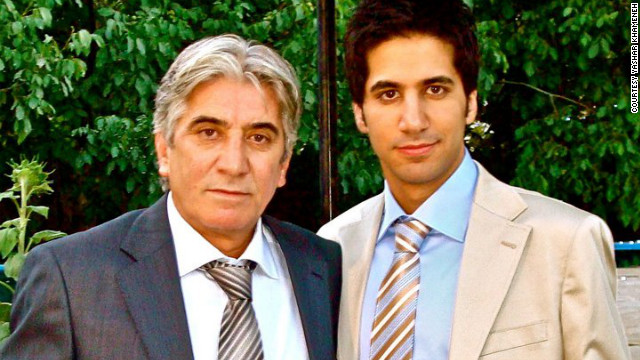


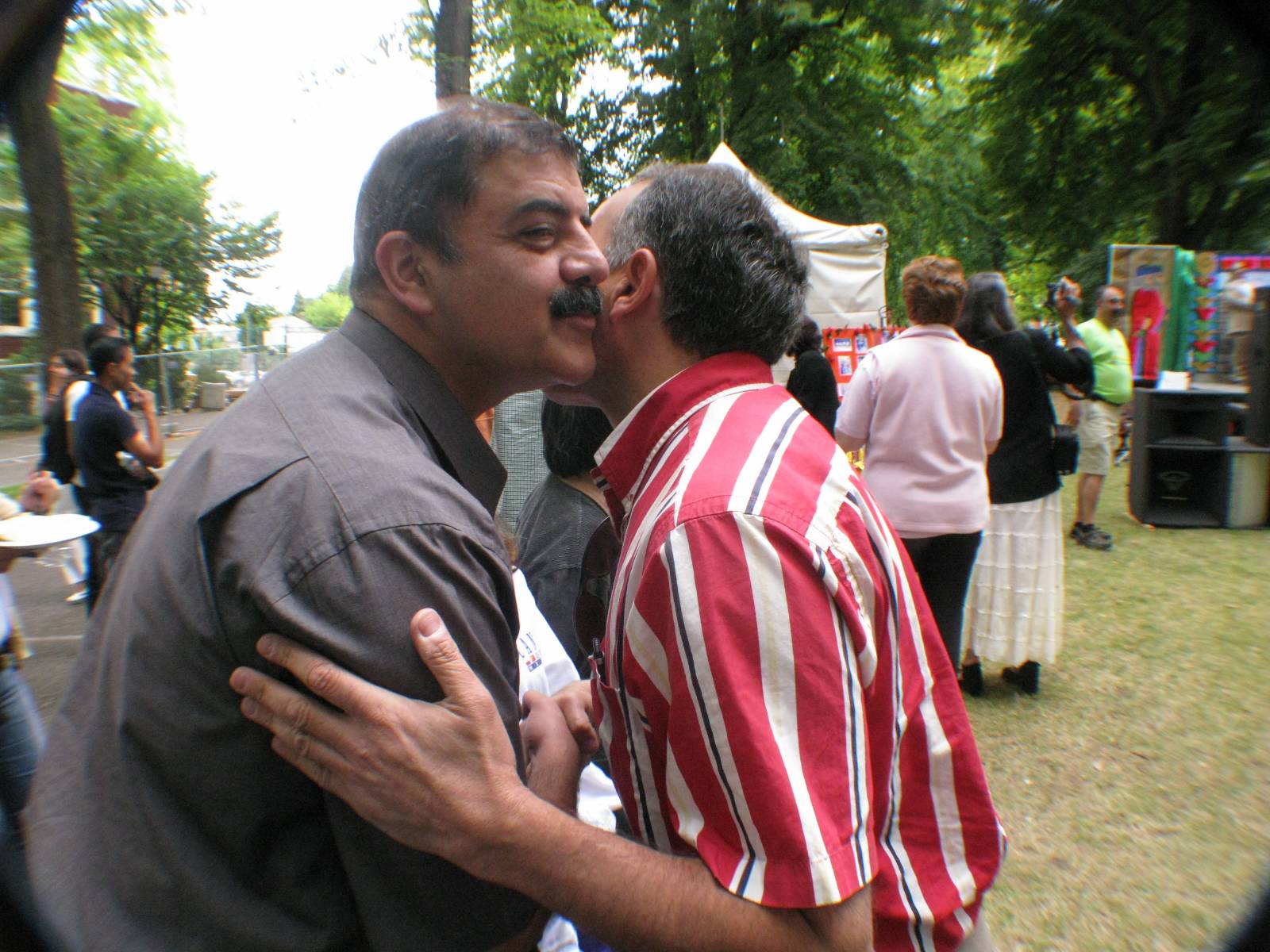
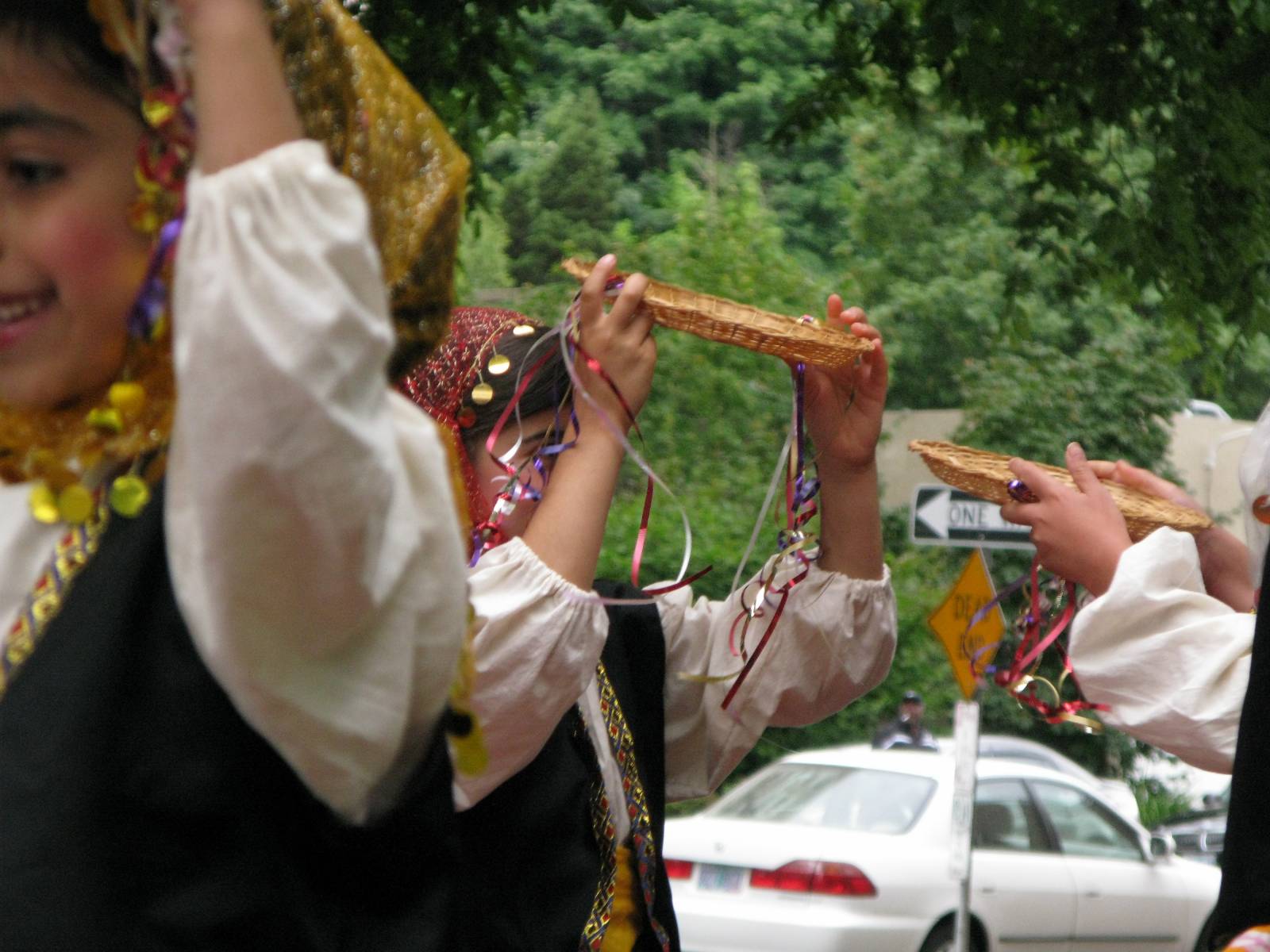


 (26 January 2012) Shirin Ebadi, the 2003 Nobel Peace Laureate, today